Before you begin
This story-led series teaches practical concepts in attendance tracking, school management, and business software. Each chapter presents a relatable situation, followed by takeaways and links to explore the tools further.
Important note: Characters, dialogue, and the names of individuals or client businesses in these scenarios—apart from explicitly identified real brands—are fictional or dramatized for educational purposes. This is not a factual account of a real case or an allegation against any person or company. NetCity, Rigi24, Kadrebi and SkolaPlus are real brands and services; their features may evolve.
Chapter Fifteen: The Package Delivered Only in the System
When the system says delivered, but the customer is still waiting for her package.
Nine oh seven — An angry customer
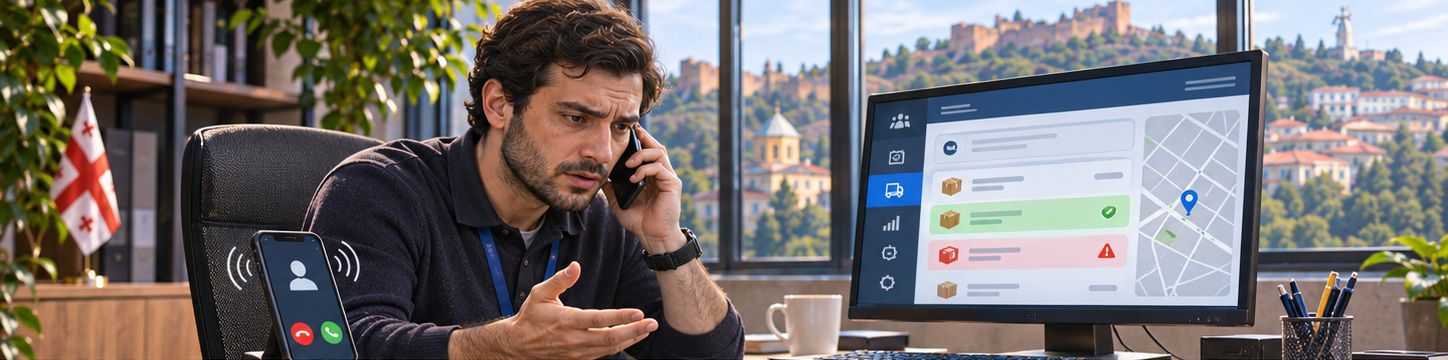
Archil had not yet finished his coffee when his phone rang.
He did not recognize the number.
“Khaneh-Rang, good morning.”
A woman’s voice came down the line.
“Good morning to you. If only it were a good morning for me, too!”
Archil was a little taken aback.
“How can I help you?”
“My name is Ketevan. I ordered a ceramic vase from your store yesterday.”
Archil said,
“Of course. Let me check.”
The woman continued,
“Last night I got a message saying my order had been delivered. But I haven’t received any package.”
Archil opened his laptop.
He asked for the order number.
The details appeared on the screen.
Status: Delivered
Archil said,
“It’s marked as delivered in our system, too.”
Ketevan replied in frustration,
“Well, that’s exactly my problem! Your system says it’s been delivered, but I’ve been waiting for my package since last night.”
Archil was silent for a few moments.
The woman continued,
“I ordered that vase for the opening of our new office. We have guests coming tonight. I need to know where my order is.”
Archil said,
“I completely understand. Let us check the delivery route and the delivery confirmation.”
“Just please don’t tell me that because the system says delivered, I must have received it.”
Archil replied,
“No. We need to establish who actually received the package.”
When the call ended, Lasha came into the store.
“Good morning. Why so serious?”
Archil showed him the screen.
“We’ve got a package that’s apparently been delivered.”
Lasha asked,
“So what’s the problem?”
“The customer says she hasn’t received it.”
Lasha set his glass of tea on the desk.
“Then we need to find out who said it was delivered.”
Nine twenty — A six-digit code
Archil opened the order.
The item details, the customer’s address, the shipping method, and the courier’s name were all there.
The courier assigned to the order was Sandro.
Lasha asked,
“Was delivery confirmed using the customer’s code?”
Archil checked the records.
“No.”
Lasha looked at him.
“Then how did the status change to delivered?”
Archil hesitated briefly.
Then he said quietly,
“I think I confirmed it myself.”
Lasha raised his eyebrows.
“You did?”
Archil remembered.
Sandro had called the previous afternoon.
He had said he had left the package at the building’s reception desk.
Assuming everything was taken care of, Archil had marked the order as delivered using the manager’s manual confirmation option.
Lasha said,
“Without getting the customer’s code?”
“Yes.”
Lasha pulled up a chair.
“Then we’ve found the problem.”
Archil said,
“Not yet. All we’ve found out is why the system is showing that status.”
The action had been recorded in the on-screen history.
Manual confirmation by manager.
No customer code.
Archil looked at the words.
“I made a mistake.”
Lasha said,
“At least we can see who confirmed it.”
Archil nodded.
“That’s true. Without that record, we might have assumed the courier had received the code from the customer.”
He dialed Sandro’s number.
Nine thirty-five — A courier with five stops
Sandro was on his way to the store.
When his phone rang, he pulled over.
“Hello, Mr. Archil.”
“Hello, Sandro. I have a question about Ketevan’s order.”
“The ceramic vase?”
“Yes. Where did you deliver it last night?”
Sandro replied,
“The building’s reception desk.”
“Did you get the customer’s delivery code?”
“No. The woman behind the desk said she’d take the package.”
Archil asked,
“Did you ask her name?”
Sandro hesitated.
“No.”
“Did you make sure it was the right building?”
“I checked the address. There were two entrances close together.”
Archil said,
“Then why didn’t you tell me delivery to the customer herself hadn’t been confirmed?”
Sandro sighed.
“I thought if reception accepted the package, it would be all right.”
Archil was silent for a few moments.
Then he said,
“We need to find out where the package is now. Please, when you get here, let’s go over yesterday’s route together.”
The call ended.
Lasha asked,
“What happened?”
Archil replied,
“He gave the package to someone without properly verifying their identity.”
Lasha said,
“Then it might still be there.”
Archil said,
“I hope so.”
Five past ten — The Route on the Screen
Sandro entered the store.
Archil opened the delivery management section in Rigi24.
Yesterday’s route was clearly shown.
Five orders on a single delivery run.
Each order had its own address and relevant details.
Sandro said,
“I delivered these two orders first, then went to Ketevan’s.”
Lasha asked,
“Where did you get those details?”
Sandro showed him his phone.
“When the route was assigned to me, I saw the details in the courier panel. I got a Telegram notification too.”
Archil said,
“Good. Now open Ketevan’s order.”
Sandro checked the details.
The address was correct.
But the building entrance had not been specified clearly enough.
Near that address were two office buildings with similar entrances.
Sandro said,
“I went through this door.”
Archil looked at the address on the map.
“But the customer’s office is through the entrance next door.”
Sandro fell silent for a few moments.
“Then I probably left it at the wrong building’s reception.”
Lasha said,
“Probably isn’t enough. We need to find the package.”
Archil replied,
“Exactly.”
Then he turned to Sandro and said,
“Let’s go there. We’ll call the receptionist first.”
Twenty to eleven — At the Reception Desk

At first, the receptionist in the second building remembered nothing.
Sandro explained,
“I delivered a box yesterday afternoon with Ketevan’s name on it.”
The woman thought for a moment.
“Oh! A small brown box?”
Sandro said,
“Yes.”
The woman pointed to the room behind the desk.
“I think it’s still in there.”
A few moments later, she brought out the box.
The Khaneh-Rang store label was visible on the package.
Archil breathed a sigh of relief.
“Thank goodness.”
But when he picked up the box, he noticed that one corner was slightly crushed.
He turned to Sandro and said,
“We need to check the item for damage before we deliver it.”
They checked the package while observing the packaging requirements.
The vase was undamaged.
Archil said to the receptionist,
“Thank you for keeping the package safe.”
The woman replied,
“I thought it was for one of the offices in this building.”
Archil said,
“The mix-up was on our end.”
As they left the building, Sandro asked,
“Should we mark the order as delivered again now?”
Archil replied,
“No. The previous status was recorded incorrectly. We shouldn’t hide what happened by making another entry for no reason.”
He continued,
“First we’ll actually deliver it, then record the outcome and the earlier mistake in the follow-up history.”
Quarter past eleven — The Actual Delivery
Archil called Ketevan.
“Ms. Ketevan, we’ve found your package.”
The woman asked,
“Where was it?”
“It was mistakenly delivered to the reception desk in the building next door.”
“So I was right when I said I hadn’t received anything.”
Archil replied,
“Yes. And I apologize for the mistake.”
Ketevan asked,
“Is it undamaged?”
“We’ve made an initial check and found no damage. Of course, you can inspect the item yourself when we deliver it.”
Ketevan said,
“I’ll be at the office until noon.”
Archil replied,
“We’ll deliver it ourselves.”
Forty minutes later, Ketevan received the box.
She inspected the vase carefully.
It was undamaged.
The woman said,
“Fortunately, there’s nothing wrong with it.”
Archil replied,
“I’m glad it arrived in time.”
Ketevan looked at him.
“I was upset about the mistake, but thank you for following it up yourselves.”
Archil said,
“You had every right to be upset. We shouldn’t have marked the order as delivered without actual confirmation.”
Ketevan gave a brief smile.
“Then I hope it won’t happen to the next customer.”
Archil said:
“That’s what we want, too.”
Twelve thirty — Why Did the PIN Matter?
Archil and Sandro returned to the store.
Lasha was waiting for them.
“Did you find it?”
Archil said:
“Yes. We delivered it to the customer safe and sound.”
Lasha asked:
“So the problem’s over?”
Archil replied:
“The customer’s problem is solved. But we need to fix the way we work.”
He opened the order delivery section.
“Rigi24 uses the customer’s six-digit code for standard deliveries. After the actual handover, the courier must get the code from the authorized recipient and enter it.”
Sandro said:
“I thought that since I’d left the package at reception, I didn’t need to.”
Archil replied:
“That was the mistake.”
Lasha said:
“Then what’s manual manager confirmation for?”
Archil explained:
“For exceptional cases where the manager has reliable information confirming that the actual delivery took place, but the code wasn’t entered. Not for simply taking the courier’s word for it without checking.”
Sandro nodded.
“I understand.”
Archil said:
“From now on, we won’t mark an order as delivered until we’ve confirmed the actual handover.”
Lasha said with a laugh:
“And you’d better stick to that rule yourself.”
Archil replied:
“Especially me!”
One ten — The Customer Who Wasn’t Home
That same day, another order was ready to go out.
The customer had ordered a small table lamp.
Sandro checked the address in his panel and went to the delivery location.
He rang the doorbell.
No one answered.
He called the customer’s number.
The customer said:
“Sorry, I had to go out. I can’t come back right now.”
Sandro asked:
“Is there someone else authorized to receive it?”
The customer replied:
“No. It would be better if I took delivery tomorrow.”
Sandro said:
“Understood.”
This time, he did not repeat the previous day’s mistake.
He did not leave the package outside the door.
Nor did he mark it as delivered.
In the courier panel, he recorded the failed delivery with the relevant reason.
When he returned to the store, he still had the package with him.
Lasha asked:
“Why has this one come back?”
Sandro said:
“The customer wasn’t there. We agreed we’d arrange another delivery.”
Lasha checked the package.
“It’s undamaged.”
Archil said:
“Good. Now we’ll record the package’s physical return to the office.”
Sandro asked:
“Does that mean it goes back into the store’s inventory?”
Archil replied:
“No. A package coming back to the office is different from an item returning to sellable inventory. This order still belongs to the same customer.”
Lasha said:
“So we just need to set a new delivery time.”
Archil replied:
“Exactly.”
Two twenty — One Order, Two Delivery Attempts
Archil called the customer.
They agreed on a new delivery time.
The redelivery route was reviewed in the delivery management section.
Sandro asked:
“So will you assign this package to me again tomorrow?”
Archil said:
“Yes, if your schedule allows. Otherwise, we can assign it to another authorized courier.”
Sandro asked:
“What about the store’s inventory?”
Lasha replied:
“This order was already taken out of inventory for dispatch. Sending the same order out again shouldn’t deduct it from inventory a second time.”
Sandro smiled.
“Good. Because if inventory goes down every time a customer isn’t home, after a few attempts there won’t be anything left in the store!”
Archil laughed.
“Exactly.”
Then he continued:
“If the order is eventually canceled and the item actually returns to sellable inventory, that’s a separate process.”
Lasha said:
“So a package can come back from the courier to the office without changing the store’s inventory.”
Archil said:
“That’s right.”
The Next Morning — The Code That Wasn’t Late This Time

Sandro went out to deliver the table lamp again.
This time, the customer was home.
The customer inspected the package.
After the actual handover, Sandro got the order’s six-digit code from the customer.
He entered the code in the panel.
The delivery was confirmed.
The order status changed to delivered.
Sandro looked at the screen.
He smiled.
“This time, I can rest easy.”
The customer asked:
“What is it?”
Sandro replied:
“Nothing. I’m just sure now that the order really has reached the right person.”
The customer laughed.
“Well, I can confirm it’s arrived too!”
Eleven forty — One Courier or Several?
At the Khaneh-Rang store, Archil was reviewing the week’s delivery list.
Lasha asked:
“If our orders increase, Sandro won’t be able to deliver them all on his own.”
Archil said:
“That’s true.”
“So do we need to hire another courier?”
“Or use other authorized couriers. Depending on order volume and working arrangements.”
Lasha asked:
“Can we manage all of them in this same section?”
Archil replied:
“For couriers registered in the system, we can manage order assignments and delivery routes. There are separate procedures for recording and coordinating with external couriers, too.”
Lasha said:
“So we don’t have to track every order just through phone calls.”
“Right. But the status recorded must match what actually happened.”
Just then, Sandro came in.
“I have a question.”
Lasha laughed.
“Have you lost another package today?”
Sandro protested:
“No! This time I delivered every package correctly.”
Archil smiled.
“What’s your question, then?”
Sandro said:
“If the customer isn’t there and I record a failed delivery, do I need to call you right away?”
Archil replied:
“If it’s urgent or something unusual has happened, yes. But what happened and the reason for the failed delivery must be recorded in the system so the person in charge at the store can follow up.”
Sandro nodded.
“Good. That way I won’t have to recount everything from memory at the end of the day.”
Lasha said:
“As long as you read the address correctly this time!”
Sandro laughed.
“I don’t think I’ll forget that mistake for the rest of my life.”
One fifteen — A Customer Is Not Always Just an Order Number
Ketevan called the store again.
Archil answered.
“Hello, Ms. Ketevan.”
“Hello. I wanted to thank you. We’ve put the vase in the office. It looks lovely.”
Archil smiled.
“I’m glad you liked it.”
Ketevan continued:
“By the way, we need a few more decorative items for our new office. We’ll probably place a larger order next month.”
Archil said:
“That’s wonderful.”
Ketevan asked:
“Can I send you a list of what we need?”
“Yes, of course.”
A few minutes later, a message arrived.
It had a file attached.
The file listed several products and the approximate quantities needed.
Archil opened the file.
“Lasha, come and have a look.”
Lasha came over.
“What is it?”
“The customer whose package went missing wants to place another order for her office.”
Lasha said:
“Great. So she’s not upset with us after all.”
Archil replied:
“Apparently not.”
Lasha looked at the file.
“Some of these products will have to be ordered in. For others, we can suggest similar alternatives.”
Archil said:
“Good. Look into it, then.”
Lasha asked:
“Where should I send you what I find?”
Archil said:
“WhatsApp, for now.”
Lasha laughed.
“All right.”
Archil looked at his phone for a few moments.
Then he suddenly said:
“Wait.”
Lasha turned back.
“What is it?”
Archil said:
“We’re making the same old mistake again.”
One thirty — Who Keeps This Information?
Archil said:
“Suppose I receive the customer’s file today. You check the prices tomorrow. Then Anna wants to call the customer the day after.”
Anna was a new employee who had been hired a while earlier to help follow up on the store’s orders.
Lasha said:
“And?”
“How will Anna know what the customer asked for and what you’ve checked?”
Lasha replied:
“She’ll ask us.”
Archil said:
“What if I’m not here?”
“She’ll ask me.”
“And if you’re not here either?”
Lasha thought for a moment.
“Then she’ll probably call the customer and ask everything all over again.”
Archil nodded.
“That’s exactly what I don’t want.”
Just then, Anna came in.
“Which customer are you talking about?”
Archil pointed to the file.
“Ketevan. She has a new order for her office.”
Anna said:
“Oh, the customer who called yesterday about her delivery?”
“Yes.”
Anna asked:
“Who’s responsible for following up on her new order now?”
Archil and Lasha looked at each other.
Neither answered.
Anna laughed.
“I think I asked a good question!”
Ten past two — A Call to NetCity
Archil called Mari.
“Hello, Mari. I have a question about Rigi 24.”
Mari replied:
“Hello, Archil. Go ahead.”
“We’re managing our orders with Rigi 24. But we still mostly use WhatsApp for internal coordination.”
Mari said:
“I see.”
Archil continued:
“Sometimes a customer sends me information. I have to pass it on to Lasha. Then Anna has to follow up. I want everyone to know what’s been said and what the latest decision was.”
Mari asked:
“Do you want to manage internal staff conversations or records of customer communications?”
Archil said:
“Both.”
Mari replied:
“Then we should clarify the difference between the two areas. CRM is for customer information and communication records. Team Chat is for internal staff conversations.”
Archil asked:
“Can they be linked?”
“Where supported, relevant messages and files can be linked to a customer record or related items in CRM. Of course, each feature requires the necessary authorization and activation.”
Archil said:
“So, for example, if Lasha sends Anna something about Ketevan’s order, can we identify which customer that conversation relates to?”
Mari replied:
“Yes, within the supported CRM integration features and users’ access permissions.”
Archil asked:
“And can I assign someone to do the work?”
Mari explained:
“Team chat is useful for coordination and sharing information. If you want to record a task with a designated owner and a follow-up time, you need to use the task-management tool. Sending a message alone isn’t a substitute for recording a task.”
Archil said:
“I understand.”
Mari continued:
“These features are independent and have their own activation requirements. Team chat and the workspace also require a base module, such as CRM or Booking, to be active.”
Archil thought for a few moments.
“Then this time, before the work gets lost between three people, we’d better choose the right approach.”
Mari laughed.
“Good idea.”
Twenty past three — A File That Had Yet to Change Hands
Archil sat down at his desk.
Ketevan’s new order file was open on the screen.
Lasha was checking the products.
Anna was waiting to find out when she should call the customer.
Archil said:
“For now, no one gives the customer any prices without checking with the others.”
Anna asked:
“Why?”
“Because first we need to establish which products are in stock, which ones we need to order, and what the final price will be.”
Lasha said:
“I’ll have the product information ready by this evening.”
Anna asked:
“Then what do I do?”
Archil replied:
“After we’ve reviewed it, you’ll need to coordinate the final selection with the customer.”
Anna asked:
“So how will the information Lasha gathers get to me?”
Archil looked at the screen.
He was silent for a few moments.
Then he smiled.
“I think it’s time we used that internal chat.”
Lasha said:
“Does that mean we won’t have to hunt through old WhatsApp messages every time?”
Archil replied:
“At least we’re aiming to keep work information in a clearly defined channel.”
Anna asked:
“And if I’m on leave tomorrow, will the person covering for me be able to see where things stand?”
Archil said:
“That’s exactly what we want to check—with the right access and a clear history.”
Anna smiled.
“Good. Because I don’t want to call the customer and say, ‘Sorry, could you explain everything again from the beginning?’”
Lasha laughed.
“Especially this customer!”
Ten past five — The End of One Problem, the Start of Working Together
At the NetCity office, Nika was reading a message from Giorgi.
Mari asked:
“What are you reading?”
Nika said:
“About courier management.”
“Well, what did you learn today?”
Nika replied:
“That a ‘delivered’ status in the system should reflect an actual delivery. Not just a guess.”
Mari said:
“That’s right.”
“That the customer’s code is for confirming delivery.”
“Yes.”
“That if the customer isn’t there, we should record a failed delivery.”
“That’s right.”
Nika continued:
“And if a package comes back to the store, it shouldn’t necessarily go straight back into sellable stock.”
Mari smiled.
“Very good.”
Nika said proudly,
“So, no new article today?”
Giorgi replied from behind his desk,
“Actually, Archil called about internal staff chat.”
Nika sighed.
“Another module?”
Mari laughed.
“Yes. Team Chat.”
Nika asked,
“Isn’t that the same as the task board we had for Badri’s company?”
Mari said,
“No. The task board is for responsibilities and specific tasks. Team chat is for staff conversations, sharing information, and coordination.”
Nika asked,
“So you can send files and discuss a customer together?”
“Within the available features and authorized access permissions, yes.”
Nika thought for a moment.
“So if I tell Giorgi something and he wants to pass it on to you...”
Giorgi cut him off.
“You’d be better off posting directly in the relevant group yourself!”
Nika laughed.
“I hadn’t even finished my sentence!”
Mari said,
“That’s exactly what makes this interesting. How information can pass between several people without its meaning changing or getting lost.”
Morteza said from behind his monitor,
“And more importantly, making sure everyone sees only the information they’re authorized to see.”
Nika nodded.
Then he opened his notebook.
He wrote:
“Having information isn’t enough; the right information has to reach the right person.”
Underneath, he added:
“Conversation, responsibility, and customer history are three different things, but they can work together.”
Meanwhile, at the Khaneh-Rang store, Archil’s phone rang again.
This time it was Ketevan.
But she wasn’t calling about the missing package.
Her new order had grown larger than she had first indicated.
And now she wanted to know which member of the store’s staff was responsible for the final follow-up.
Archil looked at Lasha.
Lasha looked at Ana.
Ana smiled.
“I think it’s finally time we decided who’s handling this customer!”
Tools and further reading
Explore the real services and related guidance behind this chapter:
Learning note: examples are illustrative, not a substitute for reviewing real records.