
Professional Online Store Features: What to Check Before Choosing a Store Builder
A practical checklist of the capabilities that turn an online storefront into a usable business system.
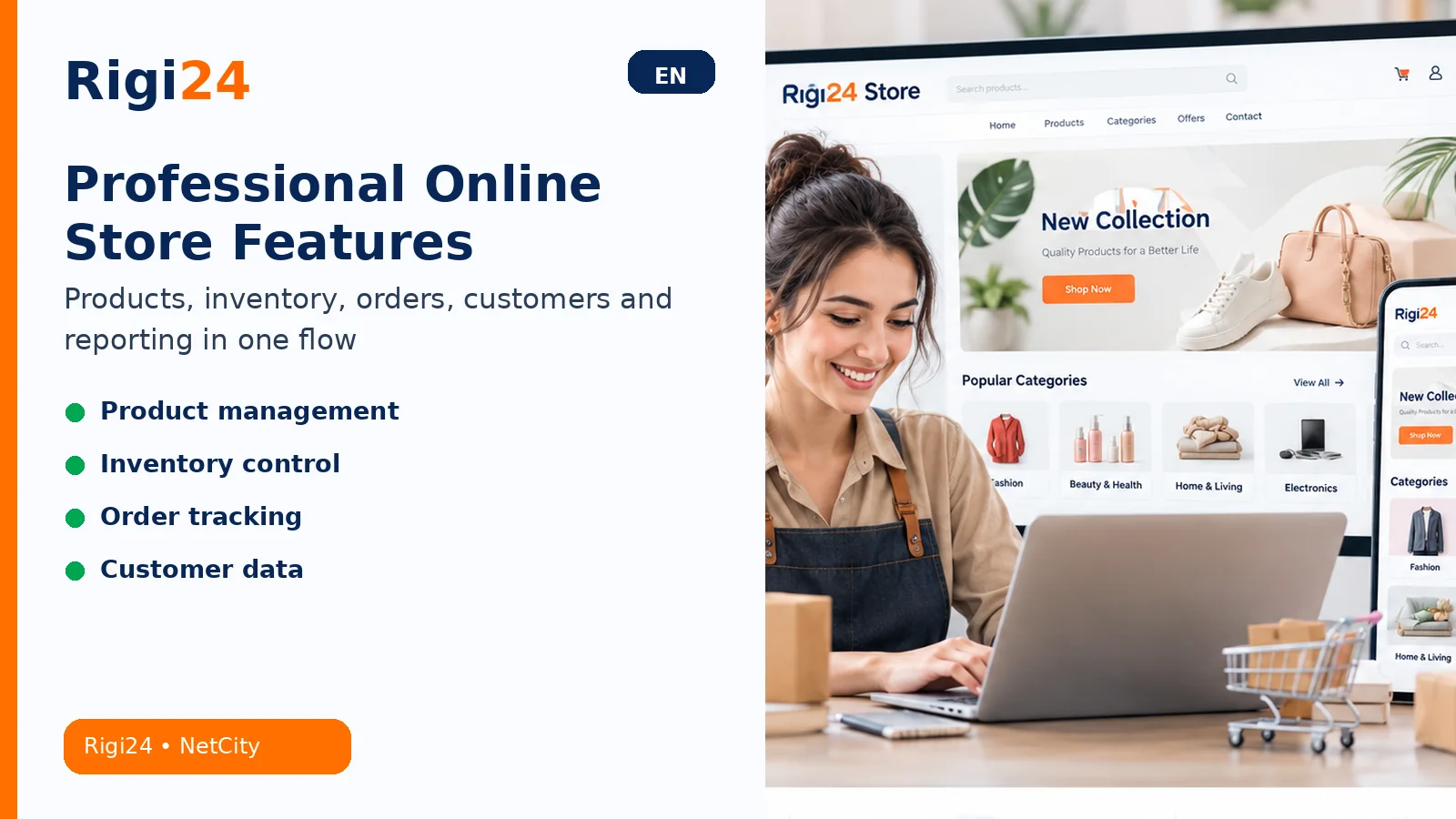
A practical checklist of the capabilities that turn an online storefront into a usable business system.
Starting online sales no longer has to begin with a large technical project. Beyond visual design, products, orders and customers need a clear operating flow, and the manager should be able to handle routine work without turning every update into a development task.
This guide looks at the subject from the perspective of a real business: what customers need, what managers should control, when a ready store platform makes sense, and where Rigi24 fits into a longer-term digital operating model.
Product management: the heart of the online store
The value of “Product management: the heart of the online store” appears when it is evaluated as part of everyday business operations. In the capabilities that turn an online storefront into a real business tool, the goal is not to add another item to a feature list. The business should know which problem this area solves, what information it requires, who controls it, and how it can stay current without calling a developer for routine changes.
A practical implementation of “Product management: the heart of the online store” starts with a simple workflow: who enters the data, what the customer sees, who updates it when something changes, and how the result is checked. Defining those responsibilities early keeps the store manageable as order volume grows and prevents technical complexity from becoming part of normal daily work.
Clear product categories
From the customer’s perspective, “Clear product categories” should reduce uncertainty and shorten the path to a completed order. Clear information, simpler choices and an obvious next action reduce mistakes and abandonment. From the manager’s perspective, the same area should be controllable, measurable and aligned with the way the business actually sells, fulfils and supports orders.
For SEO and user experience, “Clear product categories” should not be treated as an isolated feature. Clear headings, useful copy, logical internal links, responsive pages, good speed and accurate information help both people and search engines understand the store. The objective is not more interface elements; it is a reliable, structured path from discovery to purchase.
Managing sizes, colors and product variants
The value of “Managing sizes, colors and product variants” appears when it is evaluated as part of everyday business operations. In the capabilities that turn an online storefront into a real business tool, the goal is not to add another item to a feature list. The business should know which problem this area solves, what information it requires, who controls it, and how it can stay current without calling a developer for routine changes.
A practical implementation of “Managing sizes, colors and product variants” starts with a simple workflow: who enters the data, what the customer sees, who updates it when something changes, and how the result is checked. Defining those responsibilities early keeps the store manageable as order volume grows and prevents technical complexity from becoming part of normal daily work.
Pricing the manager can control
From the customer’s perspective, “Pricing the manager can control” should reduce uncertainty and shorten the path to a completed order. Clear information, simpler choices and an obvious next action reduce mistakes and abandonment. From the manager’s perspective, the same area should be controllable, measurable and aligned with the way the business actually sells, fulfils and supports orders.
For SEO and user experience, “Pricing the manager can control” should not be treated as an isolated feature. Clear headings, useful copy, logical internal links, responsive pages, good speed and accurate information help both people and search engines understand the store. The objective is not more interface elements; it is a reliable, structured path from discovery to purchase.
Accurate inventory and fewer order mistakes
The value of “Accurate inventory and fewer order mistakes” appears when it is evaluated as part of everyday business operations. In the capabilities that turn an online storefront into a real business tool, the goal is not to add another item to a feature list. The business should know which problem this area solves, what information it requires, who controls it, and how it can stay current without calling a developer for routine changes.
A practical implementation of “Accurate inventory and fewer order mistakes” starts with a simple workflow: who enters the data, what the customer sees, who updates it when something changes, and how the result is checked. Defining those responsibilities early keeps the store manageable as order volume grows and prevents technical complexity from becoming part of normal daily work.
A simple, understandable cart
From the customer’s perspective, “A simple, understandable cart” should reduce uncertainty and shorten the path to a completed order. Clear information, simpler choices and an obvious next action reduce mistakes and abandonment. From the manager’s perspective, the same area should be controllable, measurable and aligned with the way the business actually sells, fulfils and supports orders.
For SEO and user experience, “A simple, understandable cart” should not be treated as an isolated feature. Clear headings, useful copy, logical internal links, responsive pages, good speed and accurate information help both people and search engines understand the store. The objective is not more interface elements; it is a reliable, structured path from discovery to purchase.
Order submission with minimal friction
The value of “Order submission with minimal friction” appears when it is evaluated as part of everyday business operations. In the capabilities that turn an online storefront into a real business tool, the goal is not to add another item to a feature list. The business should know which problem this area solves, what information it requires, who controls it, and how it can stay current without calling a developer for routine changes.
A practical implementation of “Order submission with minimal friction” starts with a simple workflow: who enters the data, what the customer sees, who updates it when something changes, and how the result is checked. Defining those responsibilities early keeps the store manageable as order volume grows and prevents technical complexity from becoming part of normal daily work.
Organized order management
From the customer’s perspective, “Organized order management” should reduce uncertainty and shorten the path to a completed order. Clear information, simpler choices and an obvious next action reduce mistakes and abandonment. From the manager’s perspective, the same area should be controllable, measurable and aligned with the way the business actually sells, fulfils and supports orders.
For SEO and user experience, “Organized order management” should not be treated as an isolated feature. Clear headings, useful copy, logical internal links, responsive pages, good speed and accurate information help both people and search engines understand the store. The objective is not more interface elements; it is a reliable, structured path from discovery to purchase.
Order status and the next action
The value of “Order status and the next action” appears when it is evaluated as part of everyday business operations. In the capabilities that turn an online storefront into a real business tool, the goal is not to add another item to a feature list. The business should know which problem this area solves, what information it requires, who controls it, and how it can stay current without calling a developer for routine changes.
A practical implementation of “Order status and the next action” starts with a simple workflow: who enters the data, what the customer sees, who updates it when something changes, and how the result is checked. Defining those responsibilities early keeps the store manageable as order volume grows and prevents technical complexity from becoming part of normal daily work.
Customer data and purchase history
From the customer’s perspective, “Customer data and purchase history” should reduce uncertainty and shorten the path to a completed order. Clear information, simpler choices and an obvious next action reduce mistakes and abandonment. From the manager’s perspective, the same area should be controllable, measurable and aligned with the way the business actually sells, fulfils and supports orders.
For SEO and user experience, “Customer data and purchase history” should not be treated as an isolated feature. Clear headings, useful copy, logical internal links, responsive pages, good speed and accurate information help both people and search engines understand the store. The objective is not more interface elements; it is a reliable, structured path from discovery to purchase.
Aligning the store with the business delivery model
The value of “Aligning the store with the business delivery model” appears when it is evaluated as part of everyday business operations. In the capabilities that turn an online storefront into a real business tool, the goal is not to add another item to a feature list. The business should know which problem this area solves, what information it requires, who controls it, and how it can stay current without calling a developer for routine changes.
A practical implementation of “Aligning the store with the business delivery model” starts with a simple workflow: who enters the data, what the customer sees, who updates it when something changes, and how the result is checked. Defining those responsibilities early keeps the store manageable as order volume grows and prevents technical complexity from becoming part of normal daily work.
Notifications that reduce post-order uncertainty
From the customer’s perspective, “Notifications that reduce post-order uncertainty” should reduce uncertainty and shorten the path to a completed order. Clear information, simpler choices and an obvious next action reduce mistakes and abandonment. From the manager’s perspective, the same area should be controllable, measurable and aligned with the way the business actually sells, fulfils and supports orders.
For SEO and user experience, “Notifications that reduce post-order uncertainty” should not be treated as an isolated feature. Clear headings, useful copy, logical internal links, responsive pages, good speed and accurate information help both people and search engines understand the store. The objective is not more interface elements; it is a reliable, structured path from discovery to purchase.
Reports that support management decisions
The value of “Reports that support management decisions” appears when it is evaluated as part of everyday business operations. In the capabilities that turn an online storefront into a real business tool, the goal is not to add another item to a feature list. The business should know which problem this area solves, what information it requires, who controls it, and how it can stay current without calling a developer for routine changes.
A practical implementation of “Reports that support management decisions” starts with a simple workflow: who enters the data, what the customer sees, who updates it when something changes, and how the result is checked. Defining those responsibilities early keeps the store manageable as order volume grows and prevents technical complexity from becoming part of normal daily work.
Managing the store from mobile
From the customer’s perspective, “Managing the store from mobile” should reduce uncertainty and shorten the path to a completed order. Clear information, simpler choices and an obvious next action reduce mistakes and abandonment. From the manager’s perspective, the same area should be controllable, measurable and aligned with the way the business actually sells, fulfils and supports orders.
For SEO and user experience, “Managing the store from mobile” should not be treated as an isolated feature. Clear headings, useful copy, logical internal links, responsive pages, good speed and accurate information help both people and search engines understand the store. The objective is not more interface elements; it is a reliable, structured path from discovery to purchase.
Speed and user experience
The value of “Speed and user experience” appears when it is evaluated as part of everyday business operations. In the capabilities that turn an online storefront into a real business tool, the goal is not to add another item to a feature list. The business should know which problem this area solves, what information it requires, who controls it, and how it can stay current without calling a developer for routine changes.
A practical implementation of “Speed and user experience” starts with a simple workflow: who enters the data, what the customer sees, who updates it when something changes, and how the result is checked. Defining those responsibilities early keeps the store manageable as order volume grows and prevents technical complexity from becoming part of normal daily work.
Security and infrastructure maintenance
From the customer’s perspective, “Security and infrastructure maintenance” should reduce uncertainty and shorten the path to a completed order. Clear information, simpler choices and an obvious next action reduce mistakes and abandonment. From the manager’s perspective, the same area should be controllable, measurable and aligned with the way the business actually sells, fulfils and supports orders.
For SEO and user experience, “Security and infrastructure maintenance” should not be treated as an isolated feature. Clear headings, useful copy, logical internal links, responsive pages, good speed and accurate information help both people and search engines understand the store. The objective is not more interface elements; it is a reliable, structured path from discovery to purchase.
Rigi24’s modular model
The value of “Rigi24’s modular model” appears when it is evaluated as part of everyday business operations. In the capabilities that turn an online storefront into a real business tool, the goal is not to add another item to a feature list. The business should know which problem this area solves, what information it requires, who controls it, and how it can stay current without calling a developer for routine changes.
A practical implementation of “Rigi24’s modular model” starts with a simple workflow: who enters the data, what the customer sees, who updates it when something changes, and how the result is checked. Defining those responsibilities early keeps the store manageable as order volume grows and prevents technical complexity from becoming part of normal daily work.
Store and CRM: two different problems
From the customer’s perspective, “Store and CRM: two different problems” should reduce uncertainty and shorten the path to a completed order. Clear information, simpler choices and an obvious next action reduce mistakes and abandonment. From the manager’s perspective, the same area should be controllable, measurable and aligned with the way the business actually sells, fulfils and supports orders.
Store and invoicing: keeping module boundaries clear
The value of “Store and invoicing: keeping module boundaries clear” appears when it is evaluated as part of everyday business operations. In the capabilities that turn an online storefront into a real business tool, the goal is not to add another item to a feature list. The business should know which problem this area solves, what information it requires, who controls it, and how it can stay current without calling a developer for routine changes.
Decision checklist before choosing a store builder
From the customer’s perspective, “Decision checklist before choosing a store builder” should reduce uncertainty and shorten the path to a completed order. Clear information, simpler choices and an obvious next action reduce mistakes and abandonment. From the manager’s perspective, the same area should be controllable, measurable and aligned with the way the business actually sells, fulfils and supports orders.
Rigi24 and NetCity
Rigi24 is a modular business-management platform, and the online store is one independent module within that ecosystem. The platform is developed by NetCity. The principle is simple: start with the problem the business has today and add another module only when it creates real value.
The Store, CRM, Loyalty Club, Faktorsaz and HR modules are not the same product. Each solves a different business problem, and keeping those boundaries clear makes pricing, expectations and implementation more transparent.
Rigi24 Store pricing and trial
The Small plan is intended for up to 15 final store orders or invoices per day and costs 69 GEL per month. For more than 15 final orders or invoices per day, the Large plan costs 119 GEL per month.
The standard trial is 15 days and can be extended administratively to a total of 30 days when needed. The service contract is annual, while invoicing is monthly.
Related reading and internal links
- What is an online store builder?
- Why Rigi24 Online Store?
- Rigi24 for small business
- Rigi24 module trial
- CRM for small business
Frequently asked questions
Do I need coding knowledge to use the store?
No. Routine product, price, inventory and order management should be handled from the management interface without relying on a developer for ordinary changes.
Do I need an existing custom website?
No. The purpose of a store builder is to reduce the dependency between starting online sales and commissioning a separate website project.
Do I have to manage hosting and servers?
In a hosted service model, infrastructure management should not become part of the store owner’s everyday workload.
Is CRM included in the Store module?
No. CRM is an independent Rigi24 module and can be activated separately when the business needs it.
Is Faktorsaz part of the Store module?
No. Faktorsaz is a separate Rigi24 module and should not be presented as an included Store feature.
How long is the trial?
The standard trial is 15 days and can be extended administratively to a total of 30 days when needed.
Conclusion
Ultimately, a store builder is useful when it removes technical friction from the manager’s path and makes products, orders, customers and growth more organized. The right choice should follow the business’s real workflow, transaction volume and growth plan rather than the number of buttons on a feature list or the appearance of the first screen.
 RIGI24 STOREWhat Is an Online Store Builder? Start Selling Without Website Design, Hosting or Coding
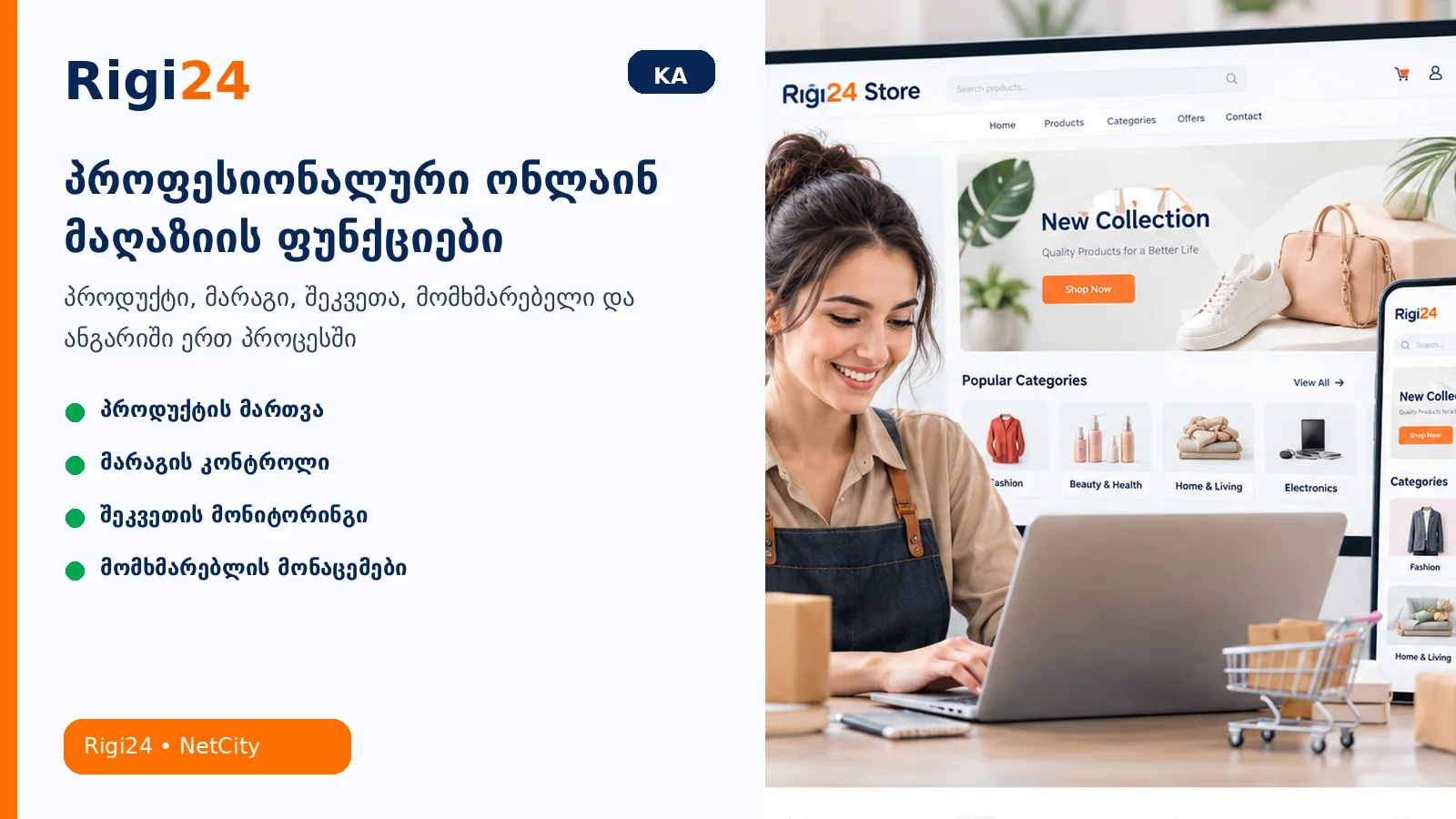 RIGI24 STOREProfessional Online Store Features: What to Check Before Choosing a Store Builder
 RIGI24 STOREWhy Rigi24 Online Store? Store Builder vs Traditional Custom Website
 RIGI24 HR · SALES GUIDEBefore You Buy an Attendance Device: Why Your Company Needs Real HR Software