Before you begin
This story-led series teaches practical concepts in attendance tracking, school management, and business software. Each chapter presents a relatable situation, followed by takeaways and links to explore the tools further.
Important note: Characters, dialogue, and the names of individuals or client businesses in these scenarios—apart from explicitly identified real brands—are fictional or dramatized for educational purposes. This is not a factual account of a real case or an allegation against any person or company. NetCity, Rigi24, Kadrebi and SkolaPlus are real brands and services; their features may evolve.
Chapter Thirteen: The Item That Was Counted Twice
When an item doubles in the reports, yet in reality there is not even enough to fill a customer's order.
Eight forty-seven — Eighty Extra Cartons
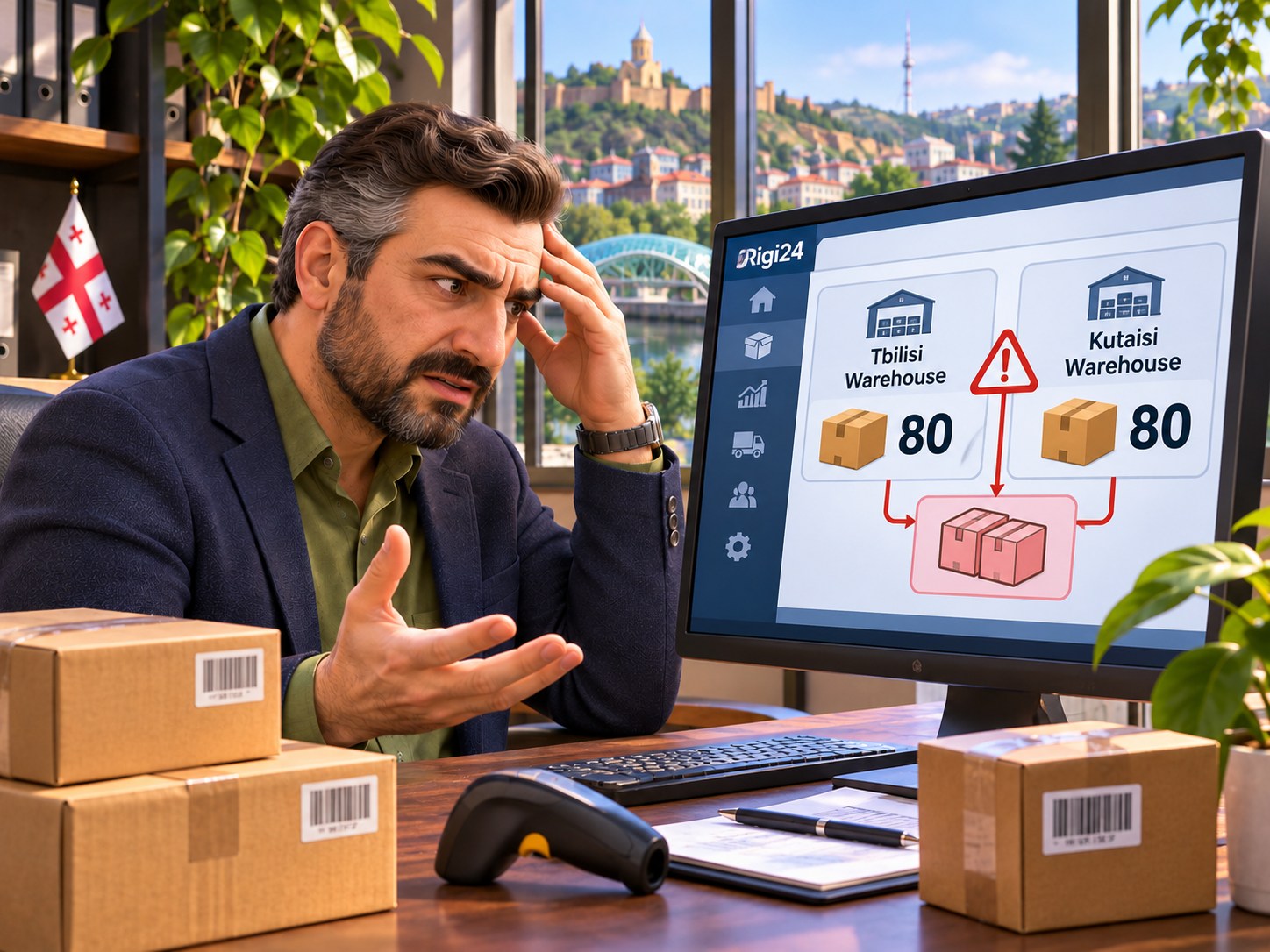
Andro looked at the monitor for the third time.
The report in front of him seemed to bring good news.
Tbilisi warehouse: 80 cartons
Kutaisi warehouse: 80 cartons
Andro was the director of White Road, a distribution company that supplied consumables to restaurants, hotels, and shops across Georgia.
The company had three warehouses, in Tbilisi, Kutaisi, and Batumi.
Its product catalog listed more than three thousand different items.
Everything from cups and disposable tableware to food packaging and hotel supplies.
Andro looked at the figures again.
Then he picked up the phone.
“Hello, Revazi. I've got a question.”
Revazi was in charge of the central warehouse in Tbilisi.
“Good morning. Go ahead.”
“Did we send the three-hundred-and-fifty-milliliter cups to Kutaisi on Friday?”
“Yes. Eighty cartons.”
“All of them went?”
“All of them.”
Andro was silent for a moment.
“Then why does the report still say we have eighty cartons in Tbilisi?”
Revazi said,
“Which report?”
“The inventory file you sent at the end of the week.”
Revazi sighed.
“Oh... That file was prepared before the dispatch was finalized in the records.”
Andro asked,
“So it's wrong now?”
“We need to correct it.”
Andro looked at the screen.
“Revazi, correcting the file isn't going to make those eighty cartons reappear in the warehouse!”
Revazi laughed.
“If only it could!”
Andro ended the call.
But before he could close the file, another phone rang.
This time it was the sales manager.
“Andro, we have an important order.”
“What kind of order?”
“Seventy cartons of those same cups. For one of our long-standing customers.”
Andro slowly turned his gaze to the screen.
The number 160 was still displayed on the monitor.
But he no longer trusted that figure.
Nine ten — An Order for Seventy Cartons
Leila, the sales manager, came into the office.
She placed the order sheet on the desk.
“The customer needs the goods within three days.”
Andro asked,
“From which warehouse?”
“It doesn't matter. We just have to deliver on time.”
“Have you checked the stock?”
Leila said,
“Yes. According to the report, we have a hundred and sixty cartons in Tbilisi and Kutaisi.”
Andro laughed.
“Then I have some bad news.”
Leila asked,
“What's happened?”
“The eighty cartons in Tbilisi are the same eighty cartons that went to Kutaisi.”
Leila looked at him for a moment.
“You mean we've counted the goods twice?”
“Apparently so.”
Leila looked down at the order sheet.
“Well, we still have eighty cartons. The customer wants seventy.”
Andro said,
“How can you be sure all eighty are fit for sale?”
“The report says eighty.”
“A few minutes ago, that same report said a hundred and sixty!”
Leila fell silent.
Andro continued,
“Until we've checked the actual stock, I don't want us making a firm promise to the customer.”
Leila said,
“But if we take too long to reply, they might buy somewhere else.”
Andro replied,
“If we make a promise without enough stock, we could lose the customer for good.”
Nine thirty-five — Boxes That Looked Alike
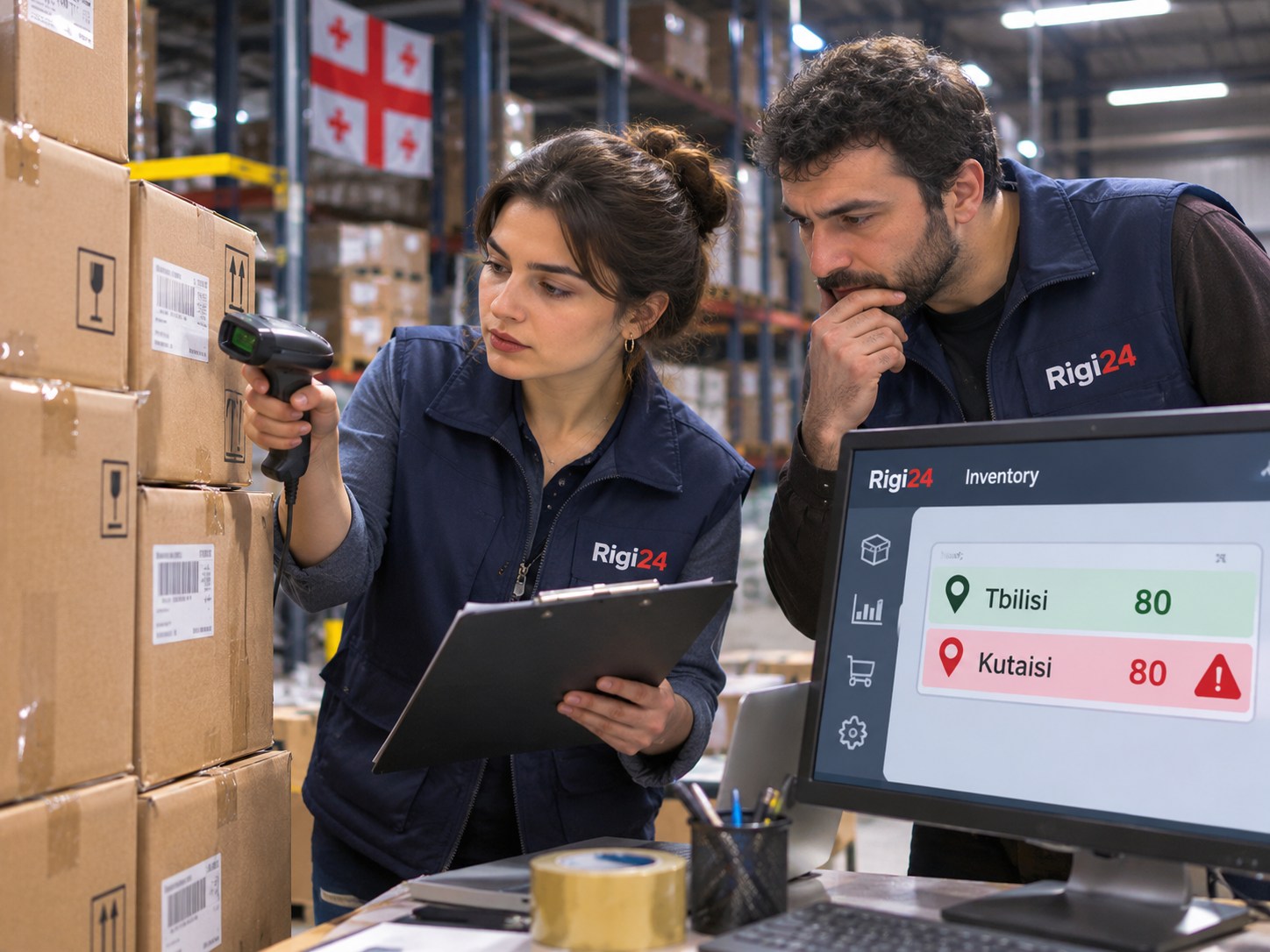
At the Kutaisi warehouse, Sopo was inspecting the shipment.
Long aisles, metal shelving, and cartons stacked several meters high filled much of the warehouse.
Most of the products came in similar packaging.
Some boxes could only be told apart by a small label.
Sofo told Andro over the phone,
“We're checking the shipment again.”
Andro asked,
“Did you receive eighty cartons?”
“Yes, eighty cartons according to the waybill.”
“Did you count them yourselves?”
“The number of packages was checked against the waybill on receipt.”
“What about their condition?”
Sofo paused.
“Two of the cartons were damaged during unloading. They were supposed to be inspected separately.”
Andro leaned back in his chair.
“So we don't have eighty cartons fit for sale.”
“Probably seventy-eight undamaged ones.”
“Probably?”
Sofo laughed.
“All right, I'll count them again!”
She gestured to her colleague.
“Please check that shipment of cups. Count the undamaged cartons separately, and mark the damaged ones too.”
A few minutes later, the count was finished.
78 undamaged cartons
2 damaged cartons
Sopo announced the result.
Andro said:
“Good. Now we need to find out how many of those seventy-eight have already been set aside for another customer.”
Sopo sighed.
“Mr. Andro, it seems no number today is going to mean what it first appears to!”
Ten Twenty — Stock That Was Not Available for Sale
Leila came back into the office.
“What did you find out?”
Andro said:
“Kutaisi has seventy-eight undamaged cartons.”
Leila smiled.
“Wonderful. Then we can sell seventy.”
Andro said:
“Wait.”
“What is it now?”
“Twenty cartons of this same product have been set aside for an earlier order.”
Leila thought for a few seconds.
Then she said:
“So... we have fifty-eight cartons available.”
Andro nodded.
“Exactly.”
He wrote on a sheet of paper:
Undamaged stock: 78
Reserved for an earlier customer: 20
Stock available for the new order: 58
Leila looked at the paper.
“You mean, out of the hundred and sixty cartons we saw in the report, we can only sell this customer fifty-eight for now?”
“From Kutaisi, yes.”
Leila sighed.
“Then we’re twelve cartons short.”
Andro picked up the phone.
“We haven’t checked the Batumi warehouse yet.”
Ten Forty-Five — The Number They Needed to Find
Davit, the Batumi warehouse manager, answered.
“Hello, Mr. Andro.”
“Hello, Davit. How many undamaged cartons of the three hundred and fifty milliliter cups do you have?”
There was the sound of papers rustling.
Davit said:
“Twenty-two cartons.”
Andro asked:
“How many are reserved?”
“Ten cartons.”
Andro wrote with his pen:
22 − 10 = 12
He smiled.
“So you have twelve cartons available for sale.”
Davit said:
“Yes.”
“Can you check their condition and be ready to send them to Kutaisi if needed?”
“Of course.”
Andro put down the phone.
He looked at Leila.
“Now we have seventy cartons.”
Leila said happily:
“So shall I confirm the order?”
Andro said:
“We still need to check how long it will take to transfer the twelve cartons from Batumi and make the final delivery.”
Leila threw up her hands.
“You never let anyone celebrate early!”
Andro laughed.
“I just want you to still be happy three days after you first feel happy!”
Eleven Ten — Three Warehouses, Three Truths
Andro looked at the three reports.
Each warehouse had its own way of doing things.
Tbilisi used an Excel file.
Kutaisi recorded its information in another program.
In addition to its main file, Batumi kept a notebook for reserved orders.
The problem was not just one incorrect number.
The information was kept in three different places.
Leila said:
“We have more than three thousand products. We can’t make this many phone calls for every order.”
Andro replied:
“You’re right.”
“So what should we do?”
Andro thought for a moment.
“A while ago, I heard about Rigi 24’s warehouse management from Giorgi.”
Leila asked:
“The same company that also has a store system and invoicing?”
“Yes.”
“Then give them a call.”
Andro picked up his phone.
Eleven Thirty — The NetCity Office
Nika was reading an article about warehouse management.
Giorgi asked from behind his desk:
“What are you reading today?”
Nika replied:
“Warehouse management.”
“Good.”
Nika continued:
“Until now, I thought warehouse management just meant knowing how many items we have.”
Mari laughed.
“And now?”
“Now I’ve realized we need to know where we have them, what condition they’re in, which ones are reserved, which ones are damaged, and who moved them.”
Giorgi said:
“Then you’re making progress.”
Nika continued:
“Just one question.”
Mari said:
“Go ahead.”
“If a company has three warehouses, does it have to buy three subscriptions?”
Giorgi explained:
“The number of independent warehouses depends on the plan you choose. For example, a plan that covers only one warehouse won’t be enough for a company with three.”
Nika said:
“What about the shelves inside each warehouse?”
Mari replied:
“Shelves and internal locations are different from independent warehouses.”
Nika said quietly:
“So we can have a Tbilisi warehouse and define halls and shelves inside it, without each shelf counting as a separate warehouse.”
Giorgi said:
“Exactly.”
Just then, the company phone rang.
Giorgi answered.
“NetCity, good morning.”
Andro’s voice came down the line.
“Hello. I’m the director of White Road Distribution. I have a question about managing multiple warehouses with Rigi 24.”
Giorgi smiled.
He gestured to Nika.
“I think your article might come in handy today.”
Nika opened his notebook.
Twelve ten — Warehouse Management with a Bigger Notebook?
The online meeting began.
Andro and Leila were sitting in the distribution company’s office.
Giorgi and Mari were on the other end.
Nika was sitting beside Mari, too.
Giorgi asked:
“What’s your biggest problem?”
Andro said:
“Every warehouse gives us a different figure, and in the end, we don’t know which one is right.”
He told them about the eighty cartons.
Giorgi listened carefully.
Then he asked:
“How do you record stock transfers at the moment?”
Andro said:
“The dispatching warehouse records the outgoing stock in its own file. The receiving warehouse enters the incoming stock separately.”
Mari asked:
“What if one of those entries isn’t made?”
Andro gave a bitter smile.
“Exactly what happened today.”
Giorgi said:
“In a properly organized process, transfers between warehouses should be recorded and tracked as distinct operations, with the origin, destination, quantity, and a history of changes.”
Andro asked:
“So if eighty cartons go from Tbilisi to Kutaisi, we’ll be able to see where they left from and where they were received?”
“Yes. Of course, the warehouse staff responsible still have to record and confirm the actual dispatch and receipt correctly.”
Andro said:
“So the software isn’t supposed to guess that the goods have arrived.”
Mari replied:
“Exactly. Until the actual delivery has been checked, you shouldn’t rely on the waybill alone.”
Nika said quietly:
“For example, if two cartons have been damaged.”
Andro looked at him in surprise.
“That’s interesting! Exactly two of our cartons were damaged!”
Nika smiled.
“Lucky guess.”
Mari said mischievously:
“His guess finally turned out to be right for once!”
Twelve forty — Product Codes, Not Product Names
Mari explained a sample structure for warehouse products.
“Suppose you have two types of cups that look almost identical.”
Andro said:
“As it happens, we do. Three hundred and fifty milliliters and four hundred milliliters.”
Mari asked:
“How do you tell them apart?”
Leila said:
“It says on the box.”
Nika asked:
“What if the writing has rubbed off?”
Leila said:
“We’d have to check the packaging or the product information.”
Mari continued:
“In the software, each distinct product should have its own appropriate identifier or SKU. A barcode or QR code can also help identify it more accurately.”
Andro asked:
“So staff can check the identifier when they receive the goods?”
“Yes. But scanning doesn’t replace checking the quantity and condition of the goods.”
Leila said:
“That’s very important for us. Some products differ only in size or packaging.”
Nika asked:
“So if someone scans the barcode for a three-hundred-and-fifty-milliliter cup, it shouldn’t be recorded as a four-hundred-milliliter one.”
Mari said:
“Exactly.”
Andro smiled.
“That’s one of the recurring stock discrepancies in our warehouse.”
One ten — Which Shelf?
Giorgi asked:
“If you wanted to find a particular product in the Kutaisi warehouse right now, how long would it take?”
Andro said:
“It depends on the product.”
Leila laughed.
“And on who’s working that day!”
Andro said:
“That’s true. Some of the longtime staff know almost everything by heart.”
Mari explained:
“You can define internal locations within the warehouse structure, such as halls, sections, and shelves.”
She gave an example:
Kutaisi Warehouse → Hall B → Shelf 3 → Position 2
Leila said:
“So instead of saying, ‘Go and find the cups in the warehouse,’ we can specify exactly where they’re stored.”
“Yes, provided movements are recorded correctly, too.”
Andro said:
“That means if the longtime warehouse manager is on leave, someone new can find the goods, too.”
Mari replied:
“That’s the point: keeping the information organized.”
Nika said quietly:
“So the warehouse no longer exists only in Mr. Revazi’s memory.”
Andro laughed.
“Exactly! And sometimes even Mr. Revazi forgets what he put on which shelf!”
One forty — A Small Start for a Large Warehouse
Andro asked:
“Our company has three warehouses and more than three thousand products. Do we have to start entering all the information tomorrow?”
Giorgi said:
“It’s better to review the warehouse structure, product codes, and basic information first. Then we can divide the data-entry and inventory-control plan into stages.”
Mari continued:
“To start with, we can walk through a sample process using the very product that caused today’s problem.”
Andro said:
“So just the cups at first?”
“To test the process, yes. Once the right way of working is clear, you can add the other products step by step.”
Leila asked:
“Can all three warehouses be managed within one organization, too?”
Giorgi said:
“Yes, on a plan with capacity for three separate warehouses and the number of products you have.”
Andro asked:
“Are the online store and invoice generator included in that price?”
Giorgi replied:
“No. Those are separate modules. If you need them, we’ll have to look at the terms and activation for each one separately.”
Andro nodded.
“Good. I want the costs and features to be clear from the start.”
Two Days Later — The First Count

At the Kutaisi warehouse, Sopo was reviewing the list of sample products.
Basic information had been recorded for each product.
The product code was specified.
The warehouse and storage location had been assigned.
The staff began the physical count.
One of the workers said:
“Three-hundred-and-fifty-milliliter cups, seventy-eight undamaged cartons.”
Sopo asked:
“Damaged?”
“Two cartons.”
“Reserved?”
“Twenty cartons from the undamaged stock have been set aside for an earlier order.”
Sopo reviewed the information.
This time, every figure had a clear meaning.
Physical stock was one thing.
Undamaged stock was another.
Reserved stock also had to be considered separately.
She said to her colleague:
“Before, when people asked how many cups we had, we’d say eighty.”
Her colleague asked:
“What do we say now?”
Sopo replied:
“We ask what they mean: total stock, undamaged stock, or stock available for sale?”
They both laughed.
But that small distinction mattered a great deal to the company.
Eleven twenty — A Discrepancy That Must Not Be Erased
Revazi called from Tbilisi.
“Sopo, I’ve corrected the old file. I deducted those eighty cartons from the Tbilisi stock.”
Sopo asked:
“Did you check the dispatch and transfer records, too?”
“Yes.”
“Good. Because we don’t want to just delete a number and then have no way of knowing why the stock changed.”
Revazi said:
“That’s right.”
Sofo continued:
“We’ve also confirmed the quantity received and the condition of the two damaged cartons.”
Revazi said:
“So the problem’s solved.”
Sofo replied:
“For this shipment, almost. But we still need to reconcile the opening data for the other products with the counts and records.”
Revazi sighed.
“You mean we’re only just getting started?”
Sofo laughed.
“Yes. But at least we’re no longer trying to erase the history of a mistake by deleting a number.”
Twelve ten — Seventy Cartons for Real
At the company office, Leila reviewed the final report on the shipment.
Kutaisi:
78 undamaged cartons
20 reserved cartons
58 cartons available for sale
Batumi:
22 undamaged cartons
10 reserved cartons
12 cartons available for sale
Total stock available for sale:
70 cartons
Leila said to Andro:
“Now we can discuss the order with more confidence.”
Andro asked:
“Has the transfer of the twelve cartons from Batumi been arranged?”
“Yes. We’ve checked the transport and delivery timing. According to the schedule, we can have the order ready by the agreed deadline.”
Andro said:
“Then give the customer an answer now.”
Leila dialed the customer’s number.
“Hello. I’m calling about the order for seventy cartons.”
She listened for a few moments.
“Yes. We’ve checked the stock and delivery timing. We can have the order ready according to the agreed schedule.”
The customer thanked her.
Leila ended the call.
Then she looked at Andro.
“If we’d relied on that figure of a hundred and sixty that morning, we’d probably be in trouble now.”
Andro said:
“Exactly.”
Two thirty — The Invoice That Didn’t Move the Goods
The company’s finance officer came into the office.
“Mr. Andro, we’ve entered the seventy-carton order. Shall I prepare the customer’s invoice?”
Andro said:
“Yes. But check with the warehouse first.”
The finance officer asked:
“Why? We already know the quantity and the price.”
Andro replied:
“Because not all seventy cartons have reached their destination yet. We need to distinguish between the order, the invoice, and the actual delivery.”
Leila said:
“That’s actually the very thing Giorgi explained.”
The finance officer asked:
“What did he say?”
Leila replied:
“That issuing an invoice and dispatching goods are two different operations. We shouldn’t deduct the same stock from the warehouse again just because we issue a customer an invoice.”
Andro said:
“Exactly.”
Then he added with a laugh:
“I’ve been hunting for eighty imaginary cartons since the start of the week. I don’t want seventy real ones disappearing over an invoice, too!”
The finance officer laughed.
Three fifteen — Three Modules Together
Andro called Giorgi again.
“I have another question about Rigi24.”
Giorgi said:
“Go ahead.”
“We’re getting the warehouse organized now. But we also make sales, issue invoices, and want to expand our online sales later.”
Giorgi said:
“I understand.”
Andro asked:
“Can all of those be connected?”
Giorgi explained:
“Rigi24 offers warehouse management, online store, and invoice generator modules within one ecosystem. We can look at a connected workflow between them and configure it to suit the features enabled.”
Andro asked:
“For example, could a customer order from the online store and have the warehouse stock calculated correctly too?”
“That’s one use for a connection between the store and the warehouse. But before using it in practice, we need to test the sequence for entering an order, reserving stock, dispatching goods, and changing the order status.”
“What about the invoice generator?”
“That’s a separate module too. When invoicing is linked to warehouse operations, we need to make sure a sale affects stock only once.”
Andro thought for a moment.
“So if a customer places an order and we then issue an invoice, those two operations shouldn’t each deduct the stock separately.”
Giorgi said:
“Exactly. It needs to be clear which stage reserves the goods and which stage records their actual dispatch.”
Andro said:
“Then I’d like us to look at these three modules together.”
Giorgi replied:
“Of course. First we’ll map out your current process, then examine the available features using a test scenario.”
Andro said:
“Good. I don’t want us entering the same product information into three separate files for every order anymore.”
Four ten — The Customer Who Hadn’t Ordered Yet
Leila sat down beside Andro.
“Do you think an online store would be useful for us too?”
Andro said:
“Right now, most of our customers order by phone or through a sales representative.”
Leila replied:
“But some just want to look at product prices and specifications and place their own orders.”
Andro nodded.
“True.”
“If we manage the product information and available stock properly, customers will also be less likely to order things we don’t have.”
Andro said:
“Of course, we need to decide which products we want to sell online and which warehouse will fulfill the orders.”
Leila said:
“And the prices need to be right too.”
Andro laughed.
“We’ve certainly learned that lesson today: not every number on a screen reflects reality!”
Five oh five — A Decision for Tomorrow
At the NetCity office, Giorgi recorded the outcome of the meeting.
Mari asked:
“What did Andro decide?”
Giorgi said:
“He wants to set up warehouse management step by step, then look at connecting it to the store and the invoice generator too.”
Nika said:
“So did he finally find out how many cartons of cups he has?”
Giorgi laughed.
“Yes.”
“How many?”
“Enough to fulfill the customer’s order, after checking the stock in good condition, the reservations, and the transfer schedule.”
Nika smiled.
“So instead of saying we have eighty cartons, we say how many are actually available to sell.”
Mari replied:
“That’s right.”
Nika opened his notebook.
He wrote:
“Warehouse management means that knowing the quantity of goods isn’t enough; we also need to know their location, condition, and the commitments attached to them.”
Then he added another line:
“The store takes orders, the invoice generator manages sales documents, and the warehouse records the actual movement of goods.”
Giorgi looked at the writing.
“Good. Just remember that how these parts connect in practice needs to be assessed against the features enabled.”
Nika replied:
“I know. This time I won’t say everything happens automatically.”
Mari smiled.
“That’s a big step forward!”
Five forty — A Question from Finance
Andro was getting ready to go home.
He closed the latest stock report.
He now had a clearer understanding of which goods were held in each warehouse and why physical stock differed from stock available for sale.
But his phone rang again.
It was the finance officer.
“Mr. Andro, there’s something we need to discuss about the seventy-carton order.”
Andro asked:
“Stock again?”
“No. The invoice.”
“What’s happened?”
“We prepared a pro forma invoice for the customer. But one of our colleagues says the final invoice has to be issued today.”
Andro said:
“But the goods haven’t all been delivered yet.”
“Exactly. I wanted to know when the invoice should be finalized and how we should reconcile it with the delivery of the goods.”
Andro thought for a few moments.
Then he smiled.
“We’ll go over this carefully tomorrow with the finance manager and Giorgi.”
He ended the call.
On a sheet of paper in front of him, he wrote:
“An order being recorded, an invoice being issued, and goods being delivered are three different events.”
Andro put the sheet in the folder.
This time, at least, he knew what his next question should be about.
Tools and further reading
Explore the real services and related guidance behind this chapter:
Learning note: examples are illustrative, not a substitute for reviewing real records.