
Best Invoice Software for Companies: From Invoice Creation to Accounting and Payment Follow-Up
A practical checklist for professional invoice software: catalog, drafts, QR, roles, accountant workflow, reporting and automation.
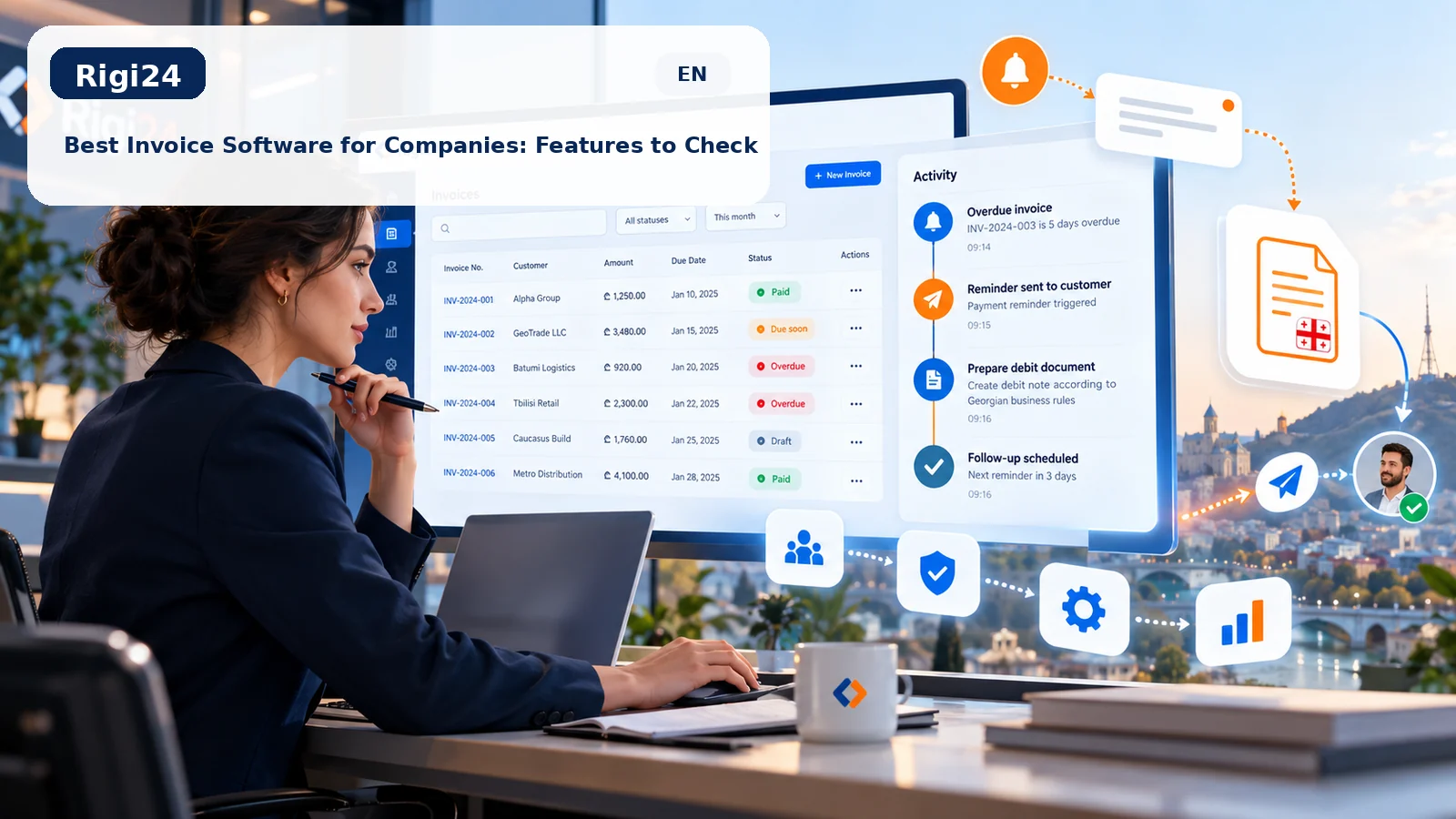
A practical checklist for professional invoice software: catalog, drafts, QR, roles, accountant workflow, reporting and automation.
In many companies, even a simple invoice still depends on accounting software, Word or Excel. That can be tolerable for a few documents, but as customers and payments grow, time, errors and manual follow-up become real operating cost. Rigi24 Faktorsaz is designed for invoice creation without specialist knowledge, reusable customer records, paid and unpaid status, recurring billing and an organized handoff to the accountant.
Customer management
In “Customer management”, real value appears when the business moves away from scattered files and repeated data entry. The goal is reducing manual work and organizing the path from issue to collection: customer and invoice data should be entered once and reused for issuing, delivery, tracking and reporting. This reduces human error, conflicting versions and wasted time while giving managers a process they can actually control.
If “Customer management” remains manual, complexity rises quickly as customers and invoices grow. A professional system should show who is responsible, the current status, what has been sent to the customer and what action comes next. That structure lets managers spend less time searching Word and Excel files and more time on collection, customer service and business decisions.
From the customer perspective, “Customer management” should be simple and understandable; for the manager it should be measurable and controllable; and for the accountant it should leave a clear history. Those three perspectives are what separate a real invoicing workflow from a template or a static PDF generator.
Product and service catalog
In “Product and service catalog”, real value appears when the business moves away from scattered files and repeated data entry. The goal is reducing manual work and organizing the path from issue to collection: customer and invoice data should be entered once and reused for issuing, delivery, tracking and reporting. This reduces human error, conflicting versions and wasted time while giving managers a process they can actually control.
If “Product and service catalog” remains manual, complexity rises quickly as customers and invoices grow. A professional system should show who is responsible, the current status, what has been sent to the customer and what action comes next. That structure lets managers spend less time searching Word and Excel files and more time on collection, customer service and business decisions.
From the customer perspective, “Product and service catalog” should be simple and understandable; for the manager it should be measurable and controllable; and for the accountant it should leave a clear history. Those three perspectives are what separate a real invoicing workflow from a template or a static PDF generator.
Draft before final issue
In “Draft before final issue”, real value appears when the business moves away from scattered files and repeated data entry. The goal is reducing manual work and organizing the path from issue to collection: customer and invoice data should be entered once and reused for issuing, delivery, tracking and reporting. This reduces human error, conflicting versions and wasted time while giving managers a process they can actually control.
If “Draft before final issue” remains manual, complexity rises quickly as customers and invoices grow. A professional system should show who is responsible, the current status, what has been sent to the customer and what action comes next. That structure lets managers spend less time searching Word and Excel files and more time on collection, customer service and business decisions.
From the customer perspective, “Draft before final issue” should be simple and understandable; for the manager it should be measurable and controllable; and for the accountant it should leave a clear history. Those three perspectives are what separate a real invoicing workflow from a template or a static PDF generator.
Preserving issued-document history
In “Preserving issued-document history”, real value appears when the business moves away from scattered files and repeated data entry. The goal is reducing manual work and organizing the path from issue to collection: customer and invoice data should be entered once and reused for issuing, delivery, tracking and reporting. This reduces human error, conflicting versions and wasted time while giving managers a process they can actually control.
If “Preserving issued-document history” remains manual, complexity rises quickly as customers and invoices grow. A professional system should show who is responsible, the current status, what has been sent to the customer and what action comes next. That structure lets managers spend less time searching Word and Excel files and more time on collection, customer service and business decisions.
From the customer perspective, “Preserving issued-document history” should be simple and understandable; for the manager it should be measurable and controllable; and for the accountant it should leave a clear history. Those three perspectives are what separate a real invoicing workflow from a template or a static PDF generator.
Email, SMS and Telegram delivery
In “Email, SMS and Telegram delivery”, real value appears when the business moves away from scattered files and repeated data entry. The goal is reducing manual work and organizing the path from issue to collection: customer and invoice data should be entered once and reused for issuing, delivery, tracking and reporting. This reduces human error, conflicting versions and wasted time while giving managers a process they can actually control.
If “Email, SMS and Telegram delivery” remains manual, complexity rises quickly as customers and invoices grow. A professional system should show who is responsible, the current status, what has been sent to the customer and what action comes next. That structure lets managers spend less time searching Word and Excel files and more time on collection, customer service and business decisions.
From the customer perspective, “Email, SMS and Telegram delivery” should be simple and understandable; for the manager it should be measurable and controllable; and for the accountant it should leave a clear history. Those three perspectives are what separate a real invoicing workflow from a template or a static PDF generator.
A dedicated link for each invoice
In “A dedicated link for each invoice”, real value appears when the business moves away from scattered files and repeated data entry. The goal is reducing manual work and organizing the path from issue to collection: customer and invoice data should be entered once and reused for issuing, delivery, tracking and reporting. This reduces human error, conflicting versions and wasted time while giving managers a process they can actually control.
If “A dedicated link for each invoice” remains manual, complexity rises quickly as customers and invoices grow. A professional system should show who is responsible, the current status, what has been sent to the customer and what action comes next. That structure lets managers spend less time searching Word and Excel files and more time on collection, customer service and business decisions.
From the customer perspective, “A dedicated link for each invoice” should be simple and understandable; for the manager it should be measurable and controllable; and for the accountant it should leave a clear history. Those three perspectives are what separate a real invoicing workflow from a template or a static PDF generator.
Secure link and QR
In “Secure link and QR”, real value appears when the business moves away from scattered files and repeated data entry. The goal is reducing manual work and organizing the path from issue to collection: customer and invoice data should be entered once and reused for issuing, delivery, tracking and reporting. This reduces human error, conflicting versions and wasted time while giving managers a process they can actually control.
If “Secure link and QR” remains manual, complexity rises quickly as customers and invoices grow. A professional system should show who is responsible, the current status, what has been sent to the customer and what action comes next. That structure lets managers spend less time searching Word and Excel files and more time on collection, customer service and business decisions.
From the customer perspective, “Secure link and QR” should be simple and understandable; for the manager it should be measurable and controllable; and for the accountant it should leave a clear history. Those three perspectives are what separate a real invoicing workflow from a template or a static PDF generator.
Status and payment tracking
In “Status and payment tracking”, real value appears when the business moves away from scattered files and repeated data entry. The goal is reducing manual work and organizing the path from issue to collection: customer and invoice data should be entered once and reused for issuing, delivery, tracking and reporting. This reduces human error, conflicting versions and wasted time while giving managers a process they can actually control.
If “Status and payment tracking” remains manual, complexity rises quickly as customers and invoices grow. A professional system should show who is responsible, the current status, what has been sent to the customer and what action comes next. That structure lets managers spend less time searching Word and Excel files and more time on collection, customer service and business decisions.
From the customer perspective, “Status and payment tracking” should be simple and understandable; for the manager it should be measurable and controllable; and for the accountant it should leave a clear history. Those three perspectives are what separate a real invoicing workflow from a template or a static PDF generator.
Partial payments and balance
In “Partial payments and balance”, real value appears when the business moves away from scattered files and repeated data entry. The goal is reducing manual work and organizing the path from issue to collection: customer and invoice data should be entered once and reused for issuing, delivery, tracking and reporting. This reduces human error, conflicting versions and wasted time while giving managers a process they can actually control.
If “Partial payments and balance” remains manual, complexity rises quickly as customers and invoices grow. A professional system should show who is responsible, the current status, what has been sent to the customer and what action comes next. That structure lets managers spend less time searching Word and Excel files and more time on collection, customer service and business decisions.
From the customer perspective, “Partial payments and balance” should be simple and understandable; for the manager it should be measurable and controllable; and for the accountant it should leave a clear history. Those three perspectives are what separate a real invoicing workflow from a template or a static PDF generator.
Accountant workflow
In “Accountant workflow”, real value appears when the business moves away from scattered files and repeated data entry. The goal is reducing manual work and organizing the path from issue to collection: customer and invoice data should be entered once and reused for issuing, delivery, tracking and reporting. This reduces human error, conflicting versions and wasted time while giving managers a process they can actually control.
If “Accountant workflow” remains manual, complexity rises quickly as customers and invoices grow. A professional system should show who is responsible, the current status, what has been sent to the customer and what action comes next. That structure lets managers spend less time searching Word and Excel files and more time on collection, customer service and business decisions.
From the customer perspective, “Accountant workflow” should be simple and understandable; for the manager it should be measurable and controllable; and for the accountant it should leave a clear history. Those three perspectives are what separate a real invoicing workflow from a template or a static PDF generator.
After payment is confirmed, the system can notify the accountant so the same customer and transaction data can be reviewed and, where required, the appropriate Georgian accounting or tax document can be prepared. The legal document type remains a professional accounting decision; Rigi24 does not replace the accountant or the Revenue Service.
Roles and permissions
In “Roles and permissions”, real value appears when the business moves away from scattered files and repeated data entry. The goal is reducing manual work and organizing the path from issue to collection: customer and invoice data should be entered once and reused for issuing, delivery, tracking and reporting. This reduces human error, conflicting versions and wasted time while giving managers a process they can actually control.
If “Roles and permissions” remains manual, complexity rises quickly as customers and invoices grow. A professional system should show who is responsible, the current status, what has been sent to the customer and what action comes next. That structure lets managers spend less time searching Word and Excel files and more time on collection, customer service and business decisions.
From the customer perspective, “Roles and permissions” should be simple and understandable; for the manager it should be measurable and controllable; and for the accountant it should leave a clear history. Those three perspectives are what separate a real invoicing workflow from a template or a static PDF generator.
Revenue and receivables reporting
In “Revenue and receivables reporting”, real value appears when the business moves away from scattered files and repeated data entry. The goal is reducing manual work and organizing the path from issue to collection: customer and invoice data should be entered once and reused for issuing, delivery, tracking and reporting. This reduces human error, conflicting versions and wasted time while giving managers a process they can actually control.
If “Revenue and receivables reporting” remains manual, complexity rises quickly as customers and invoices grow. A professional system should show who is responsible, the current status, what has been sent to the customer and what action comes next. That structure lets managers spend less time searching Word and Excel files and more time on collection, customer service and business decisions.
From the customer perspective, “Revenue and receivables reporting” should be simple and understandable; for the manager it should be measurable and controllable; and for the accountant it should leave a clear history. Those three perspectives are what separate a real invoicing workflow from a template or a static PDF generator.
Recurring invoices
In “Recurring invoices”, real value appears when the business moves away from scattered files and repeated data entry. The goal is reducing manual work and organizing the path from issue to collection: customer and invoice data should be entered once and reused for issuing, delivery, tracking and reporting. This reduces human error, conflicting versions and wasted time while giving managers a process they can actually control.
If “Recurring invoices” remains manual, complexity rises quickly as customers and invoices grow. A professional system should show who is responsible, the current status, what has been sent to the customer and what action comes next. That structure lets managers spend less time searching Word and Excel files and more time on collection, customer service and business decisions.
From the customer perspective, “Recurring invoices” should be simple and understandable; for the manager it should be measurable and controllable; and for the accountant it should leave a clear history. Those three perspectives are what separate a real invoicing workflow from a template or a static PDF generator.
Due-date reminders
In “Due-date reminders”, real value appears when the business moves away from scattered files and repeated data entry. The goal is reducing manual work and organizing the path from issue to collection: customer and invoice data should be entered once and reused for issuing, delivery, tracking and reporting. This reduces human error, conflicting versions and wasted time while giving managers a process they can actually control.
If “Due-date reminders” remains manual, complexity rises quickly as customers and invoices grow. A professional system should show who is responsible, the current status, what has been sent to the customer and what action comes next. That structure lets managers spend less time searching Word and Excel files and more time on collection, customer service and business decisions.
From the customer perspective, “Due-date reminders” should be simple and understandable; for the manager it should be measurable and controllable; and for the accountant it should leave a clear history. Those three perspectives are what separate a real invoicing workflow from a template or a static PDF generator.
Activity history
Debtor reporting
Commercial data security
Accounting documents and Georgian rules
Revenue Service Georgia — Accounting Documents
Rigi24 and NetCity
NetCity — Rigi24 / Faktorsaz
Pricing and trial
Current pricing is 47 GEL per month for up to 30 issued invoices per day and 69 GEL per month for more than 30. The standard trial is 15 days and can be extended administratively to a total of 30 days under the general service rules.
Practical checklist
Related reading
- Online Invoice Maker
- Automatic Recurring Invoices
- Rigi24 Trial
- Rigi24 CRM
- Rigi24 for Small Business
- Rigi24
Frequently asked questions
Do I need accounting expertise?
Not for ordinary invoice creation and sending. Legally required accounting and tax documents should still be reviewed by the accountant.
Are automatic monthly invoices supported?
Yes. A recurring template can create a new independent invoice at the scheduled time.
Can unpaid invoices be identified?
Yes. Statuses and debtor reporting are intended to keep unpaid and overdue invoices visible.
Are Email, SMS and Telegram supported?
Yes. The supplied feature set includes multichannel delivery through those channels.
Is Faktorsaz a complete accounting system?
No. Faktorsaz focuses on invoicing and collection workflow and does not replace a complete accounting system or the accountant.
Who owns Rigi24?
Rigi24 is a NetCity product and ecosystem.
Conclusion
In many companies, even a simple invoice still depends on accounting software, Word or Excel. That can be tolerable for a few documents, but as customers and payments grow, time, errors and manual follow-up become real operating cost. Rigi24 Faktorsaz is designed for invoice creation without specialist knowledge, reusable customer records, paid and unpaid status, recurring billing and an organized handoff to the accountant.
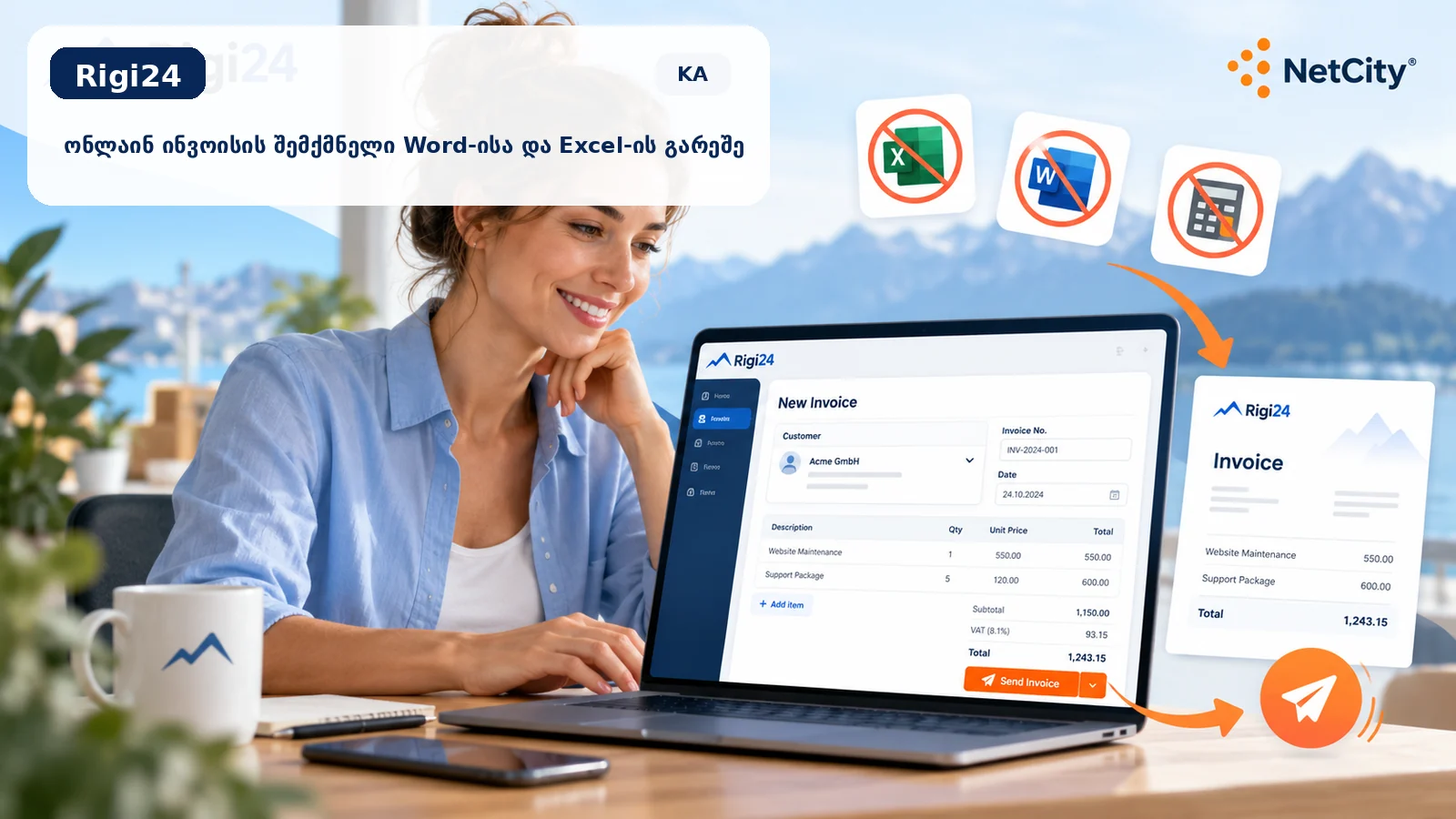 RIGI24 FAKTORSAZWhat Is an Online Invoice Maker? Create and Send Invoices Without Word, Excel or Accounting Software
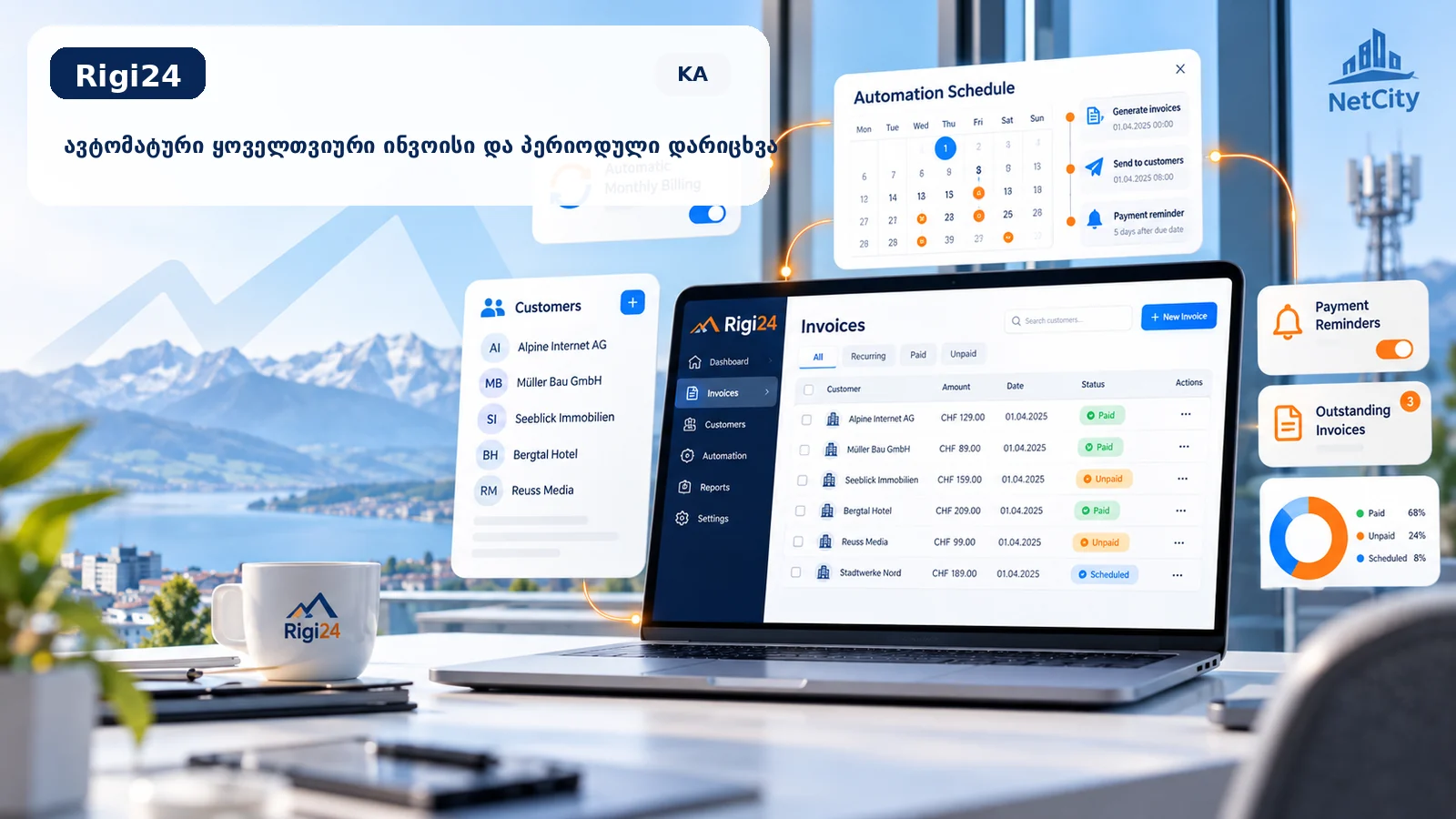 RIGI24 FAKTORSAZWhat Are Automatic Monthly Invoices? End Manual Recurring Billing
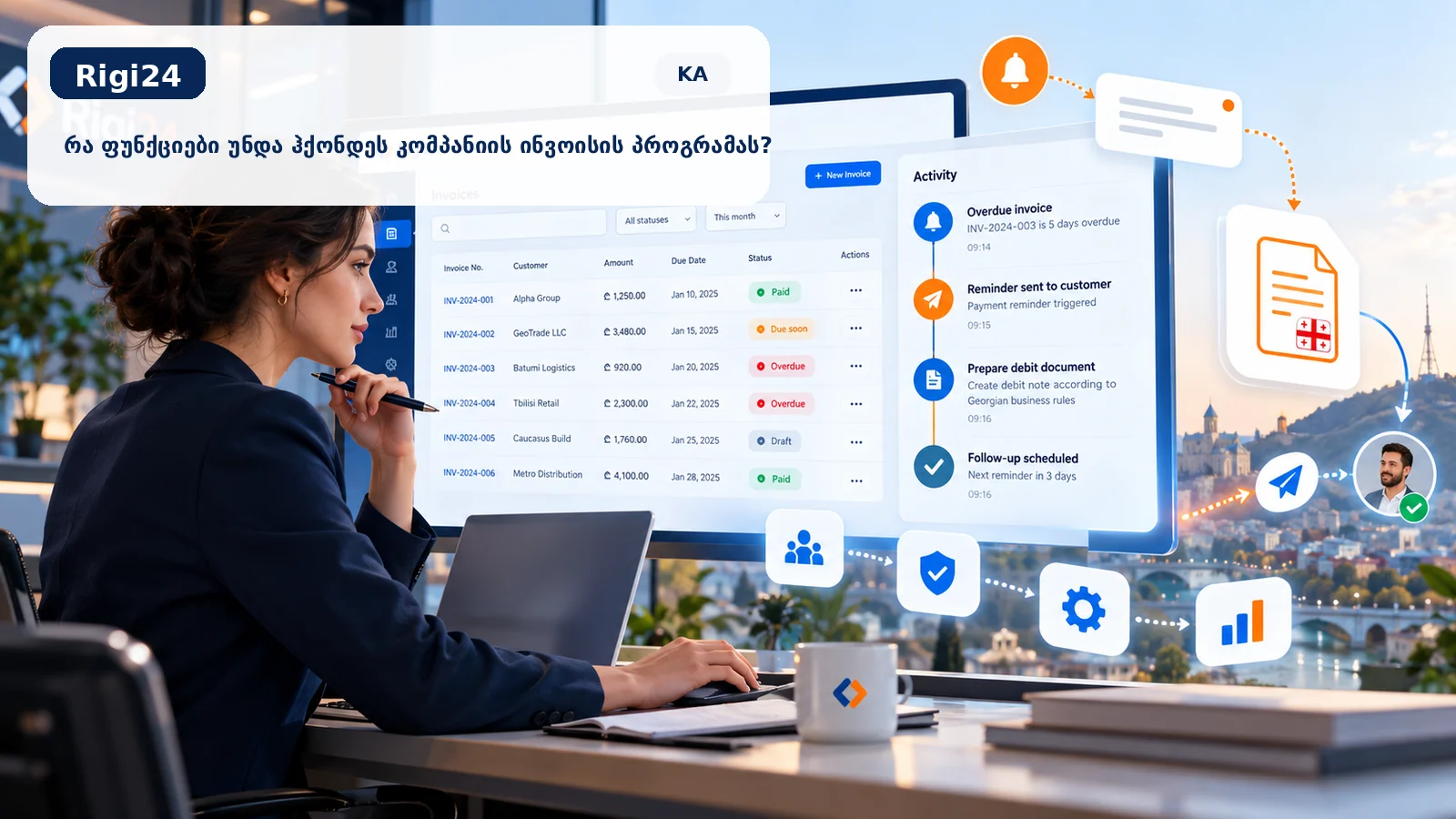 RIGI24 FAKTORSAZBest Invoice Software for Companies: From Invoice Creation to Accounting and Payment Follow-Up
 RIGI24 STOREWhat Is an Online Store Builder? Start Selling Without Website Design, Hosting or Coding