
How to Properly Set Up a Customer Loyalty Club? A Guide to Increasing Customer Return, Retention, and CLV
Learn step-by-step how to design and implement an effective customer loyalty program that improves retention, boosts CLV, and drives repeat purchases across various business models.
Setting up a customer club can technically seem simple: select a system, assign points for each purchase, and define a few rewards. But the difficult part starts exactly after this stage. Why do some Loyalty Programs become part of the customer’s daily behavior after a few months, while others remain just an unused menu in the business panel? Why does one program increase repeat visits and another just distribute discounts? The answer lies in strategy design, reward economics, customer experience, team training, and continuous measurement.
A customer club is successful when it changes a specific behavior. If there is no measurable difference before and after implementing the program in return visits, purchase intervals, Redeem, customer value, or engagement, merely having ten thousand members does not mean success. Therefore, the starting point should not be "What reward should we give?" The starting point must be: "Which customer behavior do we want to improve?"
This article is a practical guide to designing and implementing a loyalty program; from defining goals and segments to points models, tiers, rewards, retention, CLV, ROI, testing, reporting, and a 90-day plan. The examples are written for restaurants, stores, and service businesses, but the core logic applies to many recurring models.
Define the Problem First, Not the Feature
One of the most common mistakes is that businesses decide to "give points as well" after seeing software features. But points are a tool, not the goal. Before building the club, the exact problem must be clearly identified.
A restaurant might have many new customers but a small number returning a second time. A beauty salon might have good customers but the interval between visits has become too long. A store might have a suitable number of orders but customers disappear after the first purchase. A multi-branch business might have loyal customers but cannot identify them across different branches.
Each requires a different program. If the issue is reducing the interval between visits, a reward with reasonable expiration can be useful. If the goal is increasing Average Order Value, a threshold reward might be better. If the goal is retaining VIP customers, tiers and level benefits become more important. If the goal is identifying repeat customers, membership and QR code might be the first priority.
Write a simple sentence: "We want to improve ... in the next 90 days." This blank must be filled with a measurable behavior.
What is Retention and Why Should It Be Measured?
Customer Retention means a business’s ability to keep customers and convert them into repeat customers over a time period. The exact definition of retention varies by industry. For a cafe, returns within 30 days may be important; for automotive services, returning within six months might be natural; for dentistry or specialized services, another timeframe may be reasonable.
Harvard Business Review in the article "The Value of Keeping the Right Customers" points to the higher cost of acquiring new customers compared to retaining existing ones and cites Bain’s research on the impact of Retention on profitability. One should not use these statistics as a definitive rule for every industry, but the direction is clear: a business whose every sale comes only from new customers must constantly buy new Acquisitions to grow.
Retention should be defined according to the natural business cycle. If a customer usually buys every 60 days, measuring 14-day returns is meaningless. First, build a Baseline, then set a goal.
What is CLV or Customer Lifetime Value?
Customer Lifetime Value or CLV tries to measure the total economic value of the entire relationship with a customer. If a customer spends 50 Lari on each purchase and on average returns ten times during the relationship, their value is not the same as a customer who buys only once for 50 Lari.
Calculating CLV can be complex or simple. To start, a small business can use the following approximate formula:
Average purchase value × number of purchases per year × average length of relationship.
This number is not perfect because it does not take Margin, service cost, and Churn into account, but it is useful for initial decision-making. Loyalty becomes valuable when it can improve one of the components of CLV: increase purchase frequency, lengthen the relationship, or shift a larger share of the customer's purchases to your business.
The program’s goal should not be just to increase Spend with discounts. If the customer buys 10% more but you lose 15% of margin through Reward, the result seems like growth but the real economics have worsened.
Calculate the program economics before Reward
Suppose the average purchase is 80 Lari and Gross Margin is about 30%. If you convert about 10% of the value of each purchase into Reward, the Loyalty cost can consume a large part of the Margin. On the other hand, if the actual cost to the business for the Reward is 2 Lari but the customer perceives a value of 8 Lari, the program becomes more attractive and sustainable.
That’s why sometimes Gifts and Free Services are better than Discounts. A café might give a special drink or dessert as a gift after several visits. The material cost may be much lower than the menu price, but the Customer Perceived Value is high. A salon might gift a short Add-on service. A store can define Rewards on a product category with better Margin.
Check each Reward with three figures: real cost to the business, perceived value to the customer, and the behavioral response it is supposed to create.
Design the Point Economy simply
Customers should not need a calculator to understand points. If 1 Lari equals 0.0073 points or there are 13 types of complex multipliers, the Program Communication fails.
A simple model like “1 Lari = 1 point” or “each qualifying purchase = X points” is easier to explain. Later, you can add multipliers for higher Tiers.
On the other hand, points must have understandable value. If a customer has to wait two years for a simple Reward, the program won’t motivate. The first Reward should be achievable relatively soon so the customer experiences the Earn → Redeem cycle.
McKinsey emphasizes the importance of Redeemers in its analysis of Loyalty; a member who has only registered is different in terms of Engagement from a member who has actually redeemed a Reward. Therefore, the design should lead the customer to their first Redeem, not just increase the Member Count.
Use Tier for Status and Progress
Tier is useful when a customer feels their long-term relationship is recognized. Bronze, Silver, and Gold can create a simple path. But Tier should not be just a name.
The level advantage can include Point Multiplier, Discount Base, access to specific Rewards, Priority Service, or non-financial Benefits. It is important that Benefits align with Brand Positioning. A luxury brand might offer exclusive access and experience instead of high discounts.
The level Threshold should also be chosen based on real data. If only 0.5% of customers ever reach Silver, the Threshold might be too high. If almost everyone becomes Gold in the first week, the Status loses its value.
Check Tier Distribution every three months to see if the structure still makes sense.
The First Reward Should Be Experienced, Not Just Seen
A Loyalty Program becomes real in the customer's mind when they consume their first Benefit. Registering and seeing 30 points on the screen is not yet a complete experience. The first Redeem is a crucial moment.
Therefore, it is better to design the journey for the first Reward to be short and simple. This does not mean the reward must be expensive. A small, real, and achievable Reward can be sufficient.
After Redeeming, the experience must also be frictionless. If the customer has to read a long code, call the operations manager, or the system shows multiple errors, a reward that should create a positive feeling turns into Friction.
In Rigi24, designing Benefit with Entitlement and Usage helps to filter out invalid Rewards before display and records final consumption in the Backend.
Design Expiration as a Behavioral Tool
Expiration has two roles: controlling Liability and creating Urgency. But Urgency should not become a feeling of deception.
If a customer buys every week, a Reward with a 30-day validity is usable. If a customer needs the service every six months, 30 days is illogical. Expiry should be set based on the Purchase Cycle.
Also, a Reminder before expiration can be useful, provided that communication Consent is respected. A message like “Your reward expires in three days” is much more relevant than a general advertisement because it relies on the actual Benefit of that specific customer.
At the system level, Expiration should be Server-Side so that an expired Reward is not just hidden in the UI but truly Invalidated.
Build Segments from Real Behavior
Not all members have the same value and behavior. A simple Segment can include New Member, Active, Redeemer, High Value, At Risk, and Dormant.
New Member has not yet experienced the cycle. Active regularly earns points. Redeemer has consumed at least one Benefit. High Value has high value or frequency. At Risk has delayed compared to the previous pattern. Dormant has had no significant activity for a considerable time.
These Segments help make messaging and Rewards more targeted. Instead of sending one discount to everyone, you might offer an Incentive to return for At Risk members and a Status Benefit more suitable for High Value members.
McKinsey recommends Behavioral Segmentation as an important foundation for Personalization. For small businesses, the same principle can be implemented with simple tools.
Restaurant: A 90-Day Example
Suppose a restaurant with two branches wants to increase Repeat Visits. In the first month, only simple Membership and Points are launched. The goal is to establish the process of customer registration and identification without disrupting the cash register workflow.
In the second month, an achievable Reward is added; for example, 100 points for a specific Benefit. At the same time, the Redeem Rate and the time required to reach the first Reward are measured.
In the third month, Silver and Gold Tiers are added for frequent customers. The business checks whether Members visit more than Non-Members, whether Rewards have been redeemed, and the impact on Average Spend.
In Rigi24 Restaurant, Reward Discounts can be calculated in the Bill Preview and consumed atomically upon Bill Completion. This type of Integration helps ensure that Loyalty reporting is aligned with actual operations.
Store: From General Discounts to Recurring Relationships
Stores are usually accustomed to Promotions. The problem is that general Sales give the same points to new and old customers alike. Loyalty can make Promotions Behavioral.
For example, a customer may reach a higher Tier after several purchases or accumulate Points. Rewards can be purchase credits or Gifts. Store Data also helps by enabling Category Preference to be used for Personalization in the future.
It is important that Loyalty does not conflict with inventory and Margins. Free Rewards on low-stock items can disrupt operations. The Program Manager must coordinate with sales and finance teams.
If you have an online store, the Rigi24 article about building an online store without a separate project for design and hosting can provide good insight into the role of Store within the ecosystem.
Service Business: Loyalty with Booking and Visits
In salons, clinics, consulting, or educational centers, the Purchase Cycle is usually defined by Appointment or Visit. Loyalty must be connected to this Journey.
For example, the goal may be to reduce the gap between visits. Rewards can be credit for the next Visit. Tiers can be built based on Lifetime Spend or Visit Count.
However, each booking should not automatically count as a Reward because Bookings can be Canceled or No-show. The appropriate Event for earning points should be Completion of Service or actual Payment.
This is an important principle: connect Points to confirmed economic or operational Events, not just temporary Clicks or Reservations.
Don’t Confuse Loyalty with CRM
CRM helps the team know what has happened with the customer, what follow-ups exist, and what Tasks or Notes are recorded. Loyalty creates behavioral incentives.
If a customer hasn’t visited for three months, CRM can generate an At-Risk Follow-up; Loyalty can offer a return Reward. These two complement each other.
In Rigi24, Customer Identity is shared, so the goal is to avoid separating customer data between modules. The article CRM for Small Business explains more details about this difference.
Which KPIs Should Be Reviewed Weekly?
At the beginning, don’t clutter the Dashboard with dozens of Metrics. Select a few actionable KPIs.
Member Activation Rate: What percentage of registered users actually earn Points?
First Redeem Rate: What percentage have used at least one Reward?
Repeat Purchase Rate: What percentage repurchase?
Days Between Purchases: How long is the purchase interval?
Reward Cost: What has been the actual cost of benefits?
Member AOV: What is the average member purchase value?
Expiration Rate: What percentage of rewards expire unused?
Tier Distribution: At which levels are customers placed?
In longer CLV periods, also review Churn and Incremental Revenue.
How to measure Customer Club ROI?
A simple ROI can be calculated by comparing the incremental profit attributed to the program with the program cost. However, complete attribution is difficult. A loyal customer may return even without rewards.
It is better, if possible, to have a cohort or test group. Compare behavior of similar members before and after. Or pilot a limited branch/group.
Shopify, in its Loyalty Analytics content, emphasizes measuring actual behavior instead of relying on vanity metrics. A large member number is attractive, but ROI is determined by Redeem, Repeat, and Margin.
Also consider software cost, reward cost, staff time, and communication expenses.
Avoid Discount Addiction
If the customer only returns for discounts every time, loyalty turns into discount addiction. To prevent this, build a mix of benefits.
Some rewards should be monetary, some experiential, and some status-based. Priority booking, early access, gifts, service add-ons, or member-only experiences can create value without direct price reduction.
McKinsey, in its discussion on Paid Loyalty, distinguishes between hard benefits and experiential benefits and shows that experiential benefits are important for maintaining long-term engagement.
Even if your program is not paid, the principle is similar: value is not only discount.
Train Staff Before Launch
Many programs fail not because of technology but because of frontline staff. If an employee cannot explain what the club is in 20 seconds, registration rates remain low.
Prepare a simple script: free membership/terms, how to earn, how to redeem, and QR. Staff should know what to do if there is a reward error and when to involve a manager.
Internal incentives can also be useful, but be careful that staff do not register customers without explanation just to increase member count. Quality membership is more important than numbers.
Launch in Phases
It is better not to activate all features on day one. Phase 1: Membership and points. Phase 2: Rewards. Phase 3: Tiers. Phase 4: Segmentation and personalization.
This has two advantages: the team learns each stage and you can see the effect of each change separately.
If you activate 20 rewards, 5 tiers, and 10 automations from the start and the result is bad, diagnosing the cause is difficult.
The First 30 Days Program
Days 1 to 3: Define goals, baseline, and program economics. Record current return rate and average spend.
Days 4 to 7: Set up membership, point rules, the first reward, and simple rules.
Week 2: Train the team and soft launch for a portion of customers.
Week 3: Record frictions. Is registration slow? Is the reward clear? Does the customer understand the QR?
Week 4: Review member activation, redemption, and feedback. Avoid big rule changes unless there is a clear error.
Days 31 to 60
At this stage, you have the initial data. Rewards that nobody wants should be removed or modified. If the First Reward is too difficult to achieve, review the Threshold.
Add a simple Tier for the valuable group. Create Active and At Risk segments. Test relevant and fewer messages.
If the business has multiple branches, compare the behavior of Branches. Training may have been done better in one branch, resulting in different Member Activation.
Days 61 to 90
Now the Retention Cohort can be reviewed. How many times have members who registered in the first month returned? What behaviors do Redeemers exhibit? How does Member AOV compare to the Baseline?
At this stage, decide about Scale. If the Program is effective, the Reward Catalog and Automation can be developed. If it is not effective, identify the problem before adding new Features.
The Reward might be weak, the Point Economy unclear, or loyalty might not be the main business issue.
A/B Test and Pilot for Small Business
You do not need complex Data Science. You can test a new Reward only in one Branch or one Segment. Or use two different Messages for small groups.
The important thing is not to change multiple Variables simultaneously. If you change Point Rate, Reward, and Message all at once, you won’t know which factor created the result.
Pilot also reduces financial risk.
Start Personalization after Data Quality
Personalization is attractive, but poor data creates bad Personalization. If you have Customer Duplicates or incomplete Purchase History, recommendations will be incorrect.
First, clean Identity, Consent, and Events. Then personalize based on simple behavior.
McKinsey has reported that correct Personalization can boost Sales and Loyalty, but this outcome requires a solid Data Foundation and precise execution.
Privacy and Trust
The loyalty program collects data; therefore, Trust is part of the Product. Only collect information that is truly necessary. Make the reason for collection clear. Keep Marketing Consent separate.
Customers should not be forced to agree to any kind of advertising to receive Points. Also, employee access to data should be Role-Based.
If you have sensitive data or a specific market, review local regulations with a legal expert.
Mistake One: Overly Generous Rewards
Excited Launches can create costs that cannot later be reduced without upsetting customers. It is better to start conservatively and increase value based on Data.
Mistake Two: Ambiguous Rules
If employees and customers give different answers about Earn, Expiry, or Redeem, trust decreases. Write short and clear Terms.
Mistake Three: Focusing on Member Count
Registration is easy; Engagement is difficult. Redeemers and Repeat Members are more important.
Mistake Four: Irrelevant Rewards
A Benefit that is just cheap is not necessarily good. It must have value for the target Segment.
Mistake Five: Lack of Operational Integration
If Loyalty is separate from Checkout or Service Completion, employees must do extra manual work and the chance of errors increases. Proper Integration is very valuable.
Mistake Six: Giving Points for Non-Definitive Events
Booking, Cart, or Draft should not necessarily create confirmed Earns. Choose the final event.
Mistake Seven: Lack of Cancellation Logic
Refund and Cancel are parts of real business. Point and Reward must have logical Reversal.
Eighth Mistake: Hidden Expiry
Expiry without notice causes distrust. Clearly announce the Policy.
Ninth Mistake: Excessive Messaging
Loyalty is not an excuse for Spam. Communication must be relevant, Consent-Based, and with a logical Frequency.
Tenth Mistake: Simultaneous Implementation Across All Branches Without a Pilot
If the Process is new, a Branch Pilot can reveal errors before Scale.
When Is Loyalty Not a Priority?
If the Product-Market Fit is weak, you have many complaints, or the basic experience is problematic, first solve that issue. Reward does not force the customer to like a bad experience.
If purchases are almost Never Repeat, classic Loyalty may have low ROI. Perhaps Referral or CRM Follow-up is more appropriate.
If Customer Data is still completely scattered, first build a Core Directory or CRM Foundation.
How Does Rigi24 Fit into This Path?
Rigi24 Loyalty is an independent module within the Rigi24 ecosystem. Membership, Point Ledger, Tier, Reward, Redemption, Entitlement, Expiration, Branch Assignment, and Digital Card/QR are at its core.
In Restaurants, the Reward Flow is linked to the final Bill and Point Award occurs after actual payment. In other related sectors, the platform can show the Context Loyalty to the manager to activate the club when it truly connects with their Workflow.
The modular model is important: businesses can start with the Core and only activate Loyalty when Retention is a real issue.
Run the Trial Like an Experiment
If you are trialing the module, write the Hypothesis before starting. Example: “If customers see Points after purchase and the first Reward is achievable in three visits, the return rate of the member group will increase.”
Then specify the required Data and Success Metric.
Rigi24’s standard Trial is 15 days and can be extended up to 30 days in total with Approval. The period is short, so prepare the Setup before starting.
Content and Customer Training
Create a small “How It Works” page. Three steps are enough: Join, earn points, use rewards.
Do not use internal terms like Entitlement with customers. They do not need to know backend architecture.
QR codes on tables, receipts, profiles, or social channels can be Entry Points.
Why Is FAQ Important for SEO and Conversion?
Customers and managers have specific questions before purchase: Do points expire? How many branches are supported? What types of rewards exist? Is CRM necessary?
FAQ reduces buying Friction and can cover Long-Tail Search Intents. For product pages and Loyalty articles, FAQ Schema is useful if it matches visible content.
Internal Linking; Do Not Publish Loyalty in Isolation
Three Loyalty articles should link to each other, but linking must be Contextual. The club definition article should link to software features. The features article should link to the Strategy guide. The Strategy article should link to CRM, Store, Booking, and Trial.
This Topic Cluster architecture helps search engines better understand thematic relationships and gives users a logical Journey.
The Rigi24 Articles page should also group these three articles under the “Customer Club and Loyalty” category to make the Cluster clear.
Link Externally to Credible Sources
External links should not be decorative. When discussing Retention costs, HBR is an appropriate source. For Loyalty Analytics, you can link to Shopify. For Behavioral Segmentation and Personalization, McKinsey is a strong reference.
These links should be placed on relevant anchors and align with the text’s claims.
Suggested Structured Data
For all three articles, use Article Schema with Headline, Description, DatePublished, DateModified, Author/Organization, Image, and MainEntityOfPage.
For the FAQ section, if the question and answer are truly displayed on the page, FAQPage Schema can also be considered.
BreadcrumbList is suitable for the path Articles → Loyalty → Article.
Schema should not present information that users cannot see on the page.
Final Checklist Before Launch
Before publishing, check that the Title and H1 are the same but not necessarily identical copies. The Meta Description should be natural and action-oriented. The Hero Image should be optimized as WebP or AVIF and have descriptive Alt Text. H2 headers should cover real user intents.
Test Internal Links. External Links should point to the original source. Check Canonical and Hreflang tags for multilingual versions. If the article is translated into eight languages, the translation must be human-readable and not just a keyword swap.
Finally, there should be a clear CTA: read the module, start a trial, or create a business.
Conclusion
Launching a customer loyalty club is not a discount project; it is a behavior-change initiative and the building of a long-term relationship. Success happens when a clear goal, a simple Point Economy, economical Rewards, understandable Tiers, smooth Experience, reliable Backend, and ongoing Measurement come together.
Retention and CLV help you shift from the perspective of “today’s sales” to “relationship value.” Member Count, Points, and Rewards are just tools to reach this goal.
The best loyalty program is not necessarily the most generous one. It is the program that the customer understands, employees execute, business economics can bear, and data shows it has created positive behavior.
If you want to start from zero, first read the article “What is a Customer Loyalty Club and Why Does Every Business Need One?” If you are in the system selection phase, the article “What Features Should Customer Loyalty Software Have?” provides a more complete technical and operational checklist. Then run the program with a small pilot and clear KPIs.
Frequently Asked Questions
Where should I start to set up a customer loyalty club?
Start with a measurable goal, not Rewards. Specify whether you want to improve Retention, Repeat Visit, AOV, or CLV, then design Points and Benefits for that goal.
How do I calculate Retention?
The exact formula depends on the business, but generally, it is the percentage of customers who remain active or have returned within a defined period. The period should align with the natural Purchase Cycle.
What is CLV?
Customer Lifetime Value is the estimated economic value of the entire relationship with a customer over time. A simple model can be Average Purchase × Purchase Frequency × Relationship Duration.
When should the first Reward be given?
The first Reward should be early enough for the customer to experience the redemption cycle but not so early that the program’s economics are harmed. Find the appropriate threshold with a pilot.
How many Tiers are appropriate?
For many small businesses, three levels are sufficient. Having more levels only makes sense if the segments are truly different.
What is the best KPI for a customer loyalty program?
No single KPI is sufficient. Repeat Rate, Redeem Rate, Days Between Purchases, Member AOV, Reward Cost, Tier Distribution, and CLV are a good set to start with.
Should all branches be activated simultaneously?
If the process is new, piloting in one branch reduces risk. After stabilizing the workflow, you can scale up.
Does a high discount create more loyalty?
Not necessarily. High discounts can erode margin and make customers dependent on promotions. Gifts, status, and experiential benefits are sometimes better.
Do we need both Loyalty and CRM?
Not always. Loyalty focuses on rewards and return behavior; CRM focuses on follow-up and relationship management. Depending on the issue, you can activate one or both.
How can we make trials useful?
Before starting a scenario, set hypotheses and KPIs. In a real trial, implement customers, points, rewards, and redemption—not just look at the UI.
Suggested Internal Links
- What is a Customer Loyalty Club: https://rigi24.ge/articles/customer-loyalty-program-georgia?lang=en
- Loyalty Software Features: https://rigi24.ge/articles/loyalty-software-features-rigi24?lang=en
- CRM for Small Business: https://rigi24.ge/articles/crm-small-business-georgia?lang=en
- Online Booking: https://rigi24.ge/articles/online-booking-georgia?lang=en
- Rigi24 Online Store: https://rigi24.ge/articles/online-store-builder-without-website-hosting?lang=en
- Module Trials: https://rigi24.ge/articles/rigi24-module-free-trial?lang=en
Suggested External Resources
- Harvard Business Review — The Value of Keeping the Right Customers: https://hbr.org/2014/10/the-value-of-keeping-the-right-customers
- Shopify — Customer Retention Program: https://www.shopify.com/blog/customer-retention-program
- Shopify — Customer Loyalty Analytics: https://www.shopify.com/blog/loyalty-analytics
- McKinsey — Next in loyalty: https://www.mckinsey.com/capabilities/growth-marketing-and-sales/our-insights/next-in-loyalty-eight-levers-to-turn-customers-into-fans
- McKinsey — Personalizing the customer experience: https://www.mckinsey.com/industries/retail/our-insights/personalizing-the-customer-experience-driving-differentiation-in-retail/
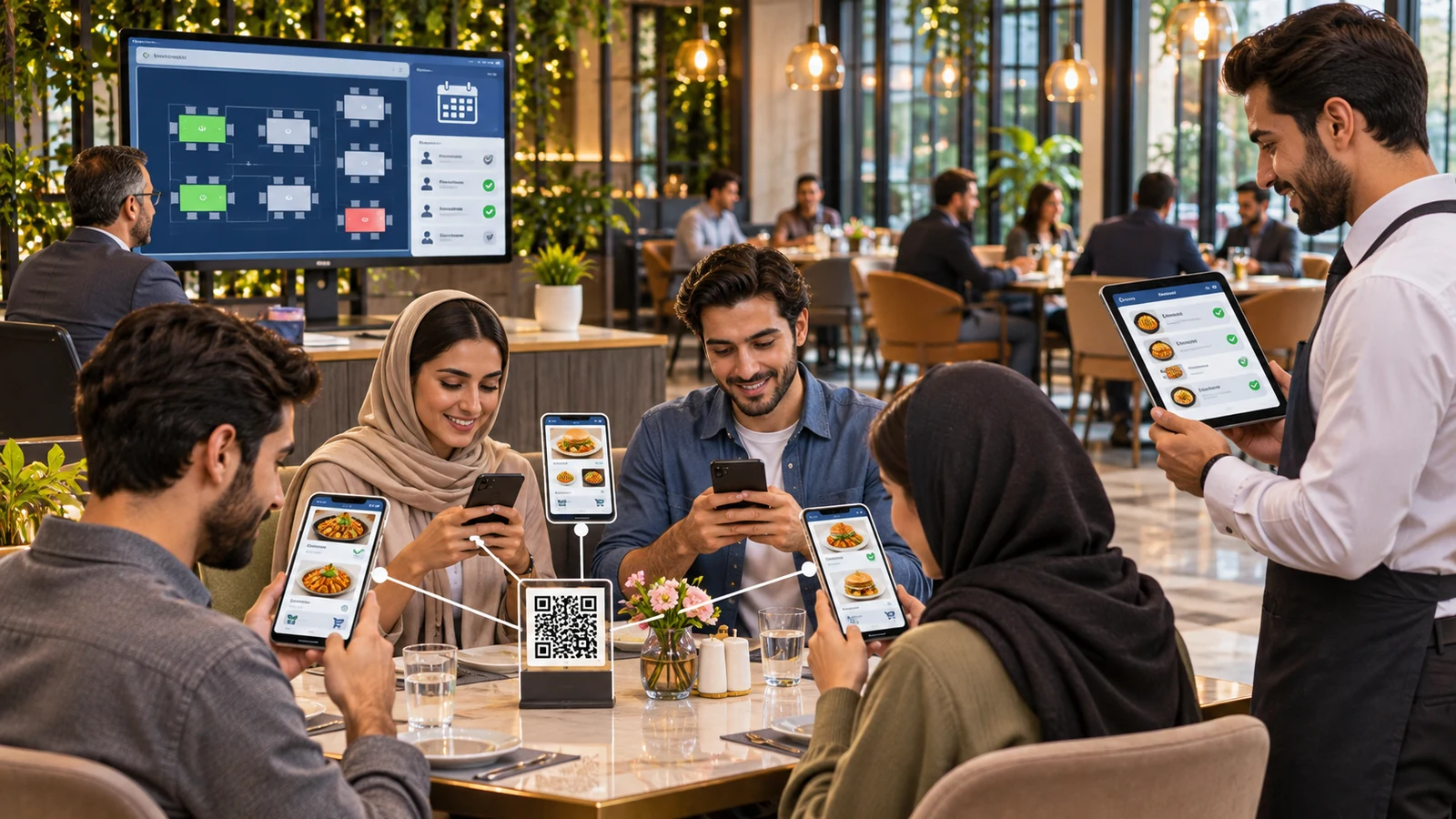 RIGI24 RESTAURANTRigi24 Restaurant Management Software: From Smart Menu and Table Ordering to Reservations and Waiter Management
RIGI24 RESTAURANTRigi24 Online Restaurant Reservations: Manage Online, Phone and In-Person Bookings in One Calendar
RIGI24 RESTAURANTWaiter and Table Ordering Management with Rigi24: Comparing Pagers and Basic QR Menus
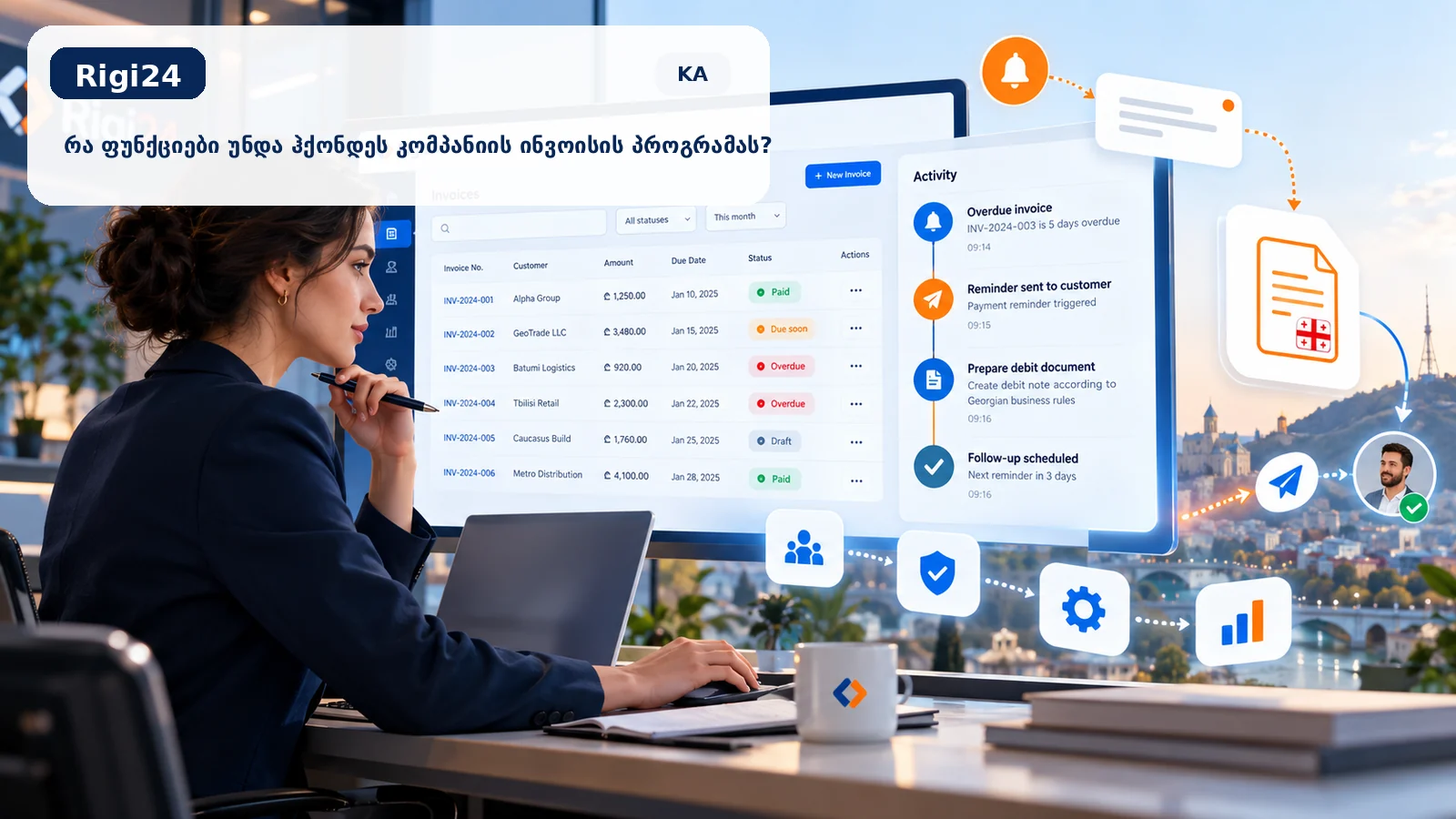 Rigi24 Academy · InvoicingComplete Guide to Rigi24 Invoicing — Invoices, Acceptance Acts, Payments and Accountant Workflow