What is a no-show and how can service businesses reduce missed appointments? 10 practical strategies
A practical guide to reducing no-shows with reminders, easier rescheduling, customer history, CRM, waitlists, and smarter appointment management for service businesses.
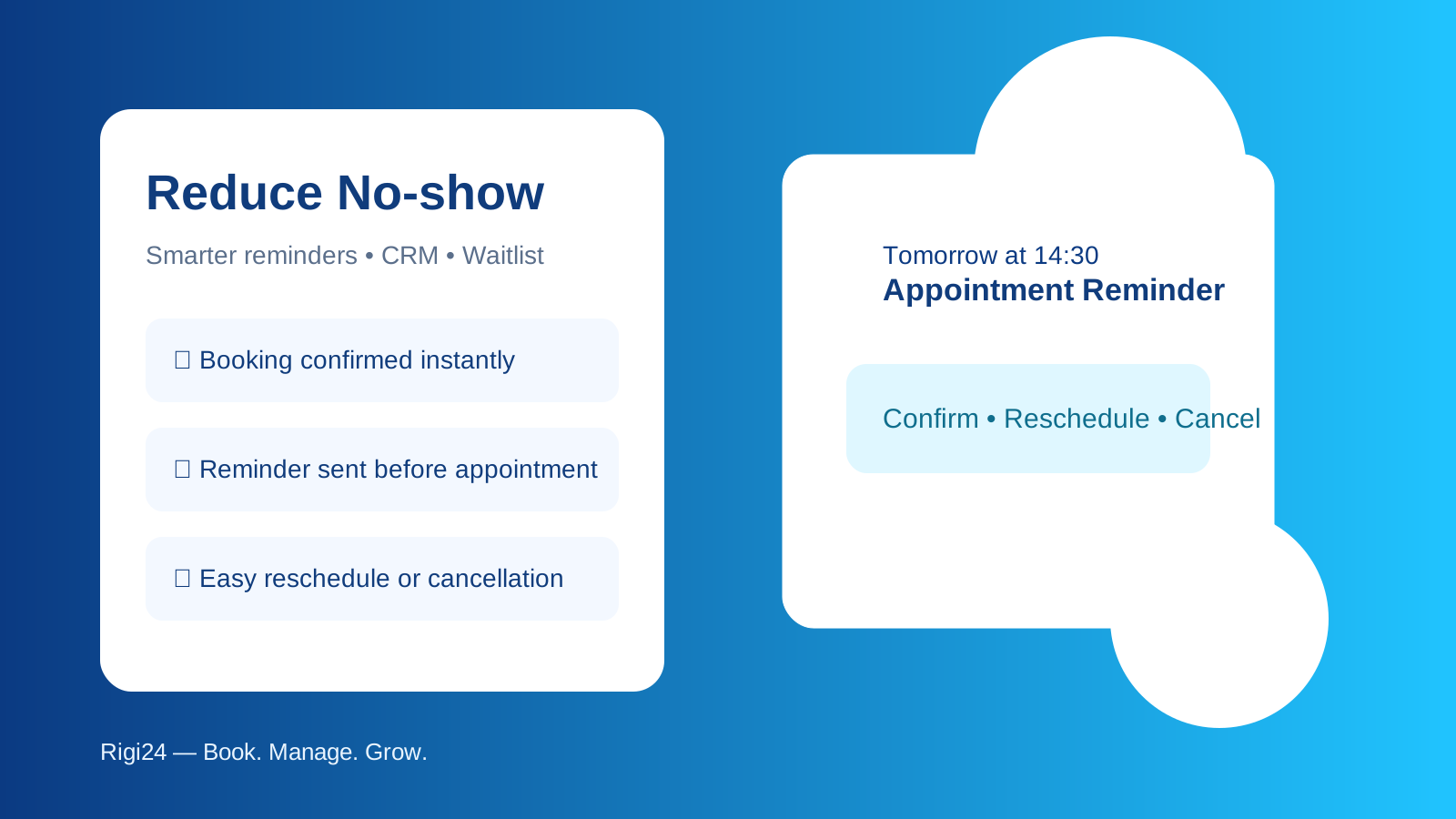
One of the most frustrating problems for service businesses is when a customer books an appointment, time is reserved for them, and then they never arrive. This situation, commonly called a no-show, is much more than a minor scheduling issue. If it happens frequently, it directly affects revenue, staff efficiency, and the experience of other customers.
For beauty salons, clinics, dental offices, consultants, trainers, repair shops, automotive services, pet care providers, and any business that works based on time, every empty slot can mean a lost opportunity.
In this guide, we explain what a no-show is, why it happens, and how businesses can reduce it with practical steps. If you have not yet read our main guide, start with what online booking is and why service businesses in Georgia need it.
What is a no-show?
A no-show happens when a customer books a date and time but does not arrive and does not cancel or notify the business in advance. In this situation, the business may lose not only that booking but also the chance to offer the same slot to another customer.
Why are no-shows a serious business problem?
- Loss of daily revenue
- Unplanned empty time slots
- Disrupted provider schedules
- Lower productivity
- Operational waste
- Missed opportunities for other customers
If this happens often, the monthly financial impact can be significant.
Why do customers become no-shows?
- They forgot their booking.
- The appointment changed and they did not notice.
- Cancellation or rescheduling was too difficult.
- They did not feel committed to the booking.
- The booking was made too far in advance.
- They booked multiple businesses at the same time and chose only one.
10 practical strategies to reduce no-shows
1. Send an immediate confirmation after booking
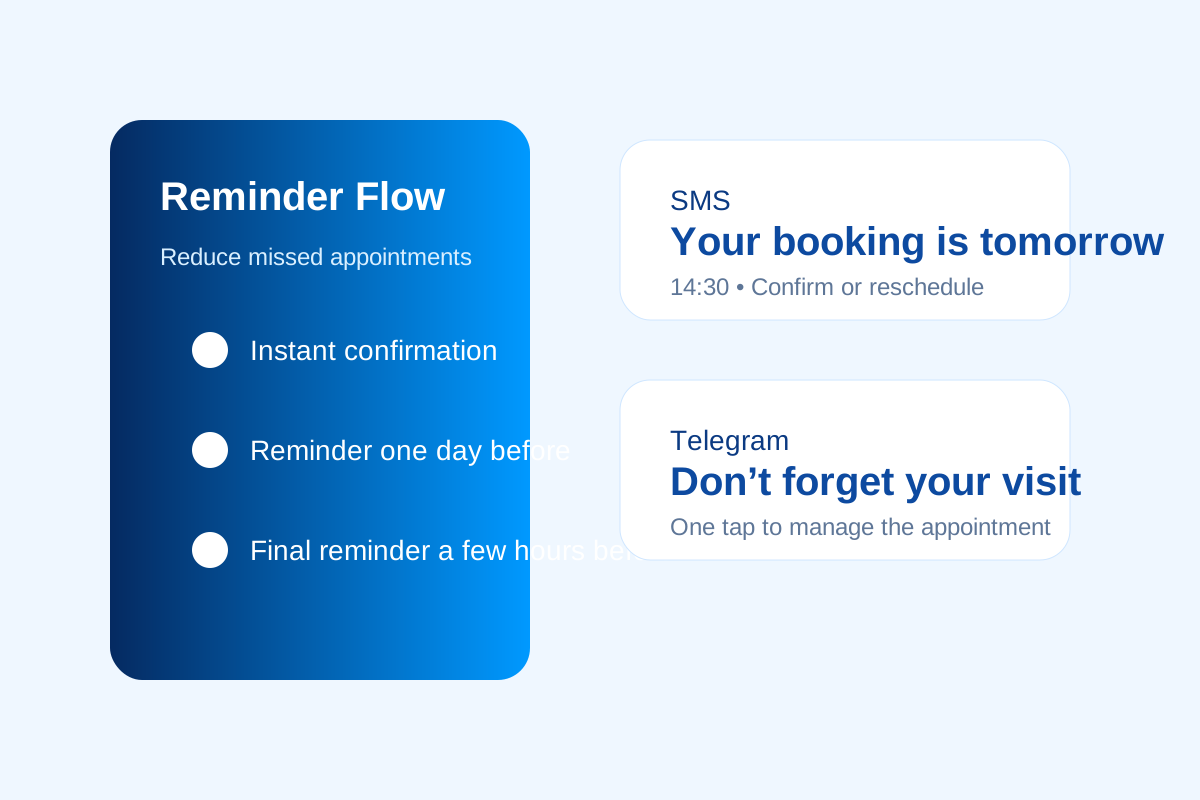
The first step is to confirm the appointment as soon as it is made. The message should include the business name, service, date, time, provider, location, and ideally a link to reschedule or cancel.
2. Send reminders before the appointment
Reminders are one of the most effective ways to reduce no-shows. They can be sent through SMS, email, or Telegram. For many businesses, one reminder the day before and another reminder a few hours before works very well.
3. Allow the customer to confirm attendance
Instead of only sending a reminder, let the customer respond with a simple “Yes, I am coming.” This gives the business a better sense of which bookings are more reliable.
4. Make cancellation and rescheduling easy
If customers cannot easily change or cancel their appointments, they may simply fail to show up. An early cancellation is always better than a no-show because the slot can still be reassigned.
5. Do not accept bookings too far in advance unless necessary
The longer the gap between booking and the appointment, the higher the chance of forgetfulness. Depending on the service, it may help to limit how far ahead customers can book.
6. Display the booking details clearly
Appointment details should be completely clear: Tuesday, 18 August, 14:30, provider name, address, and contact information. The clearer the details, the fewer misunderstandings.
7. Keep a history of customer behavior
This is where online booking + CRM becomes powerful. If the system tracks how many appointments a customer has had, how many times they cancelled, and whether they previously no-showed, the business can make better decisions.
8. Identify high-risk customers
Not all customers behave the same way. Some may always arrive on time, while others repeatedly cancel or fail to appear. For high-risk customers, businesses can use manual approval, extra reminders, or a deposit policy when appropriate.
9. Use a waitlist
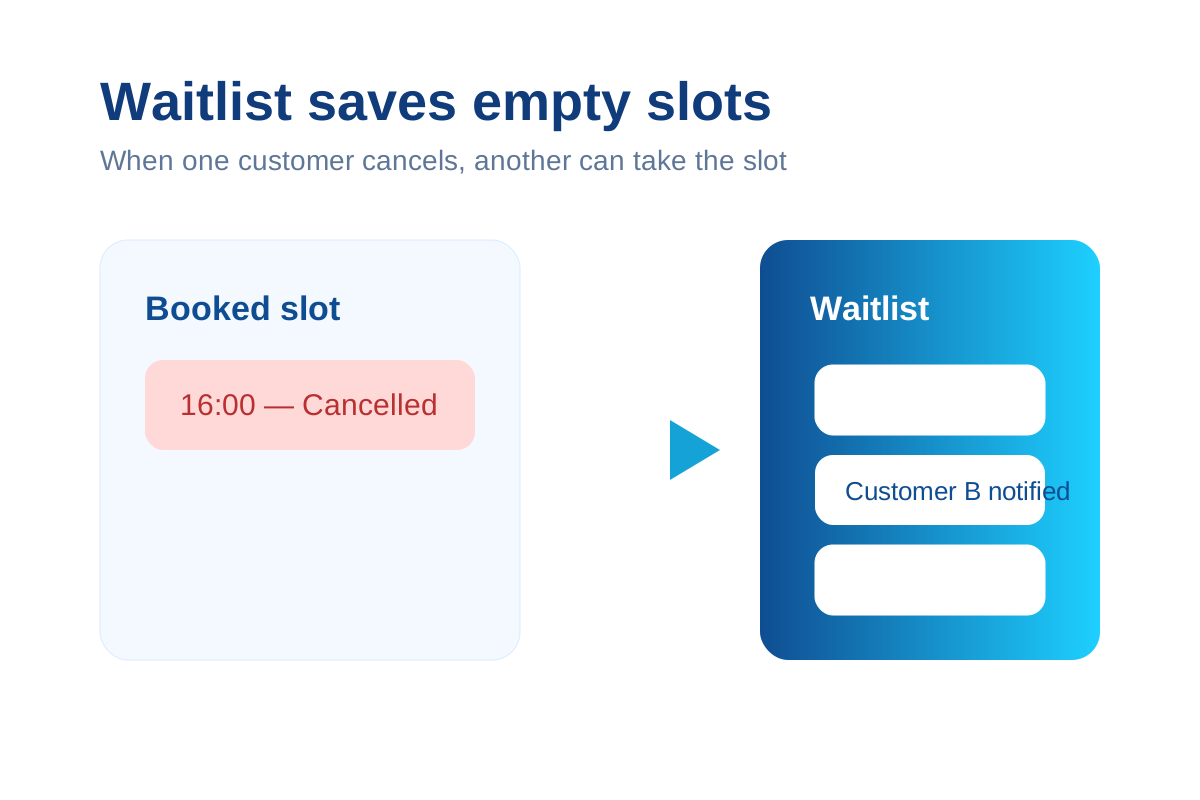
A waitlist helps reduce the financial impact of cancellations and no-shows. If one slot becomes available, another interested customer can be notified quickly.
10. Keep the booking journey simple
If booking is slow, confusing, or full of unnecessary steps, customers may take it less seriously. A clean process should feel straightforward: Select service → Select time → Enter details → Confirm booking.
The role of SMS, email, and Telegram
SMS remains one of the most direct reminder channels. Email is ideal for more complete appointment details and maps. Telegram offers a fast experience for users who already rely on it daily. Together, these channels can reduce missed appointments significantly.
Does taking a deposit reduce no-shows?
In some businesses, yes. It is especially useful for long, expensive, or high-demand services. But it is not necessary for every type of business. Many no-shows can be reduced simply through clear communication and better booking management.
Cancellation policies should be clear
If your business has a cancellation policy, it should be presented simply and transparently. For example: “Please cancel at least 12 hours before your appointment if you are unable to attend.”
How different service businesses manage no-shows
In beauty businesses, a no-show may leave a stylist idle. In clinics and dental offices, it wastes medical time and resources. For consultants and independent professionals, time is often the service itself. The right solution depends on the business model.
How Rigi24 helps reduce no-shows
Rigi24 provides the tools businesses need to manage appointments more effectively: online bookings, in-person and phone bookings, customer history, cancellations, rescheduling, notifications, SMS, email, Telegram, booking status management, provider scheduling, concurrent capacity, and CRM.
You can also explore business search, learn more about Rigi24 and NetCity, or reach us through the contact page.
Can no-shows be eliminated completely?
No. The realistic goal is not zero no-shows, but reducing preventable no-shows and limiting the damage when they do happen. The more data and structure your business has, the better your decisions become.
Summary
No-shows are a common challenge for service businesses, but a large part of the problem can be managed. Confirmation messages, reminders, easy cancellations, customer history, risk awareness, and waitlists all help businesses protect revenue and improve the customer experience.
Frequently asked questions
What is a no-show?
A no-show is when a customer books an appointment but does not arrive and does not cancel in advance.
What is the best way to reduce no-shows?
The best results usually come from combining confirmation, reminders, and easy rescheduling or cancellation.
Can SMS reduce no-shows?
Yes. SMS is especially useful when the appointment was booked several days in advance.
What is a waitlist?
A waitlist is a list of customers who want an already occupied time slot and can be contacted if that slot becomes free.
Can Rigi24 help?
Yes. Rigi24 supports appointment management, customer history, reminders, Telegram, email, and CRM tools that help reduce no-shows.
Related Rigi24 Academy articles
- What Is Online Booking and Why Do Service Businesses in Georgia Need It?
- Even if your customers do not book online, why do you still need appointment management and CRM?
- Bookings from Instagram, WhatsApp, Phone or Website? How to manage every customer request in one system
Useful external resources