
Rigi24 International Partnership and White-Label Business Software
Explore how the modular Rigi24 business ecosystem can be localized, deployed as white-label software, resold or developed with partners in international markets.

Rigi24 is a modular business software ecosystem designed for companies that want connected operational tools instead of a collection of unrelated applications. For international markets, Rigi24 can be evaluated for localization, reseller cooperation, technology partnerships, regional representation and white-label deployment under a partner's own brand and domain.
An international Rigi24 project does not begin with a promise that the same software configuration will work unchanged in every country. It begins by understanding the target market, required modules, local business processes, integrations and regulatory considerations. This approach makes it possible to distinguish simple translation from real market localization.
What is white-label business software?
White-label business software is technology developed by one provider that may, under an appropriate commercial agreement, be presented to customers using another company's commercial identity. Depending on the project, this may include a local brand, domain, visual identity, language, selected modules and market-specific integrations.
White-label is more than replacing a logo
A professional white-label SaaS project may affect branding, URLs, customer-facing communication, onboarding, support responsibilities, infrastructure, integrations and localization. For that reason, Rigi24 treats white-label deployment as a technical and commercial project rather than a cosmetic change.
Brand and domain options
For suitable projects, deployment under a partner's proposed brand and domain can be evaluated. The exact architecture depends on the selected modules, infrastructure requirements, localization scope and commercial agreement.
One modular ecosystem instead of many disconnected applications
Many businesses use separate systems for appointments, CRM, employees, communications, online sales, restaurant operations, loyalty and invoicing. This can create duplicated customer information, fragmented workflows and multiple administration environments.
Rigi24 follows a modular approach. A business or international partner can evaluate one module first and expand into additional areas when there is a real business case.
Core business environment
Rigi24 Core provides the central business environment on which additional services can be organized. This allows expansion without requiring every module on the first day.
Appointment and queue management
Appointment and Queue supports businesses that need customer scheduling, availability management, capacity rules and appointment workflows.
Customer relationship management
Rigi24 CRM is intended for customer records, follow-ups and relationship workflows. Country-specific sales practices or integrations can be assessed separately when required.
Human resources and workforce management
Rigi24 HR covers workforce-oriented processes such as employee information, attendance, shifts and leave. HR is one of the areas where local labor, payroll, tax and privacy requirements can differ substantially between countries, so country-specific assessment is particularly important.
Communications, PBX and WebRTC
Rigi24 Communications, PBX Cloud and WebRTC capabilities can connect communication workflows with the wider business environment. Telecom rules, providers and network conditions may differ by market.
Commerce, restaurants, loyalty and invoicing
The wider ecosystem also includes Online Shop, Restaurant, Loyalty Club and Invoice Maker modules. These modules can be evaluated independently because payment methods, fiscal requirements, invoice formats, customer loyalty practices and restaurant workflows may vary by country.
International partnership models
Rigi24 international cooperation is not limited to a single commercial structure. The appropriate model depends on the market, partner capabilities and required technology.
- Single-module deployment: introduce one Rigi24 module for a specific market need.
- Multi-module deployment: combine several connected modules.
- Reseller cooperation: evaluate resale of selected Rigi24 services in a local market.
- Business partnership: combine local market knowledge with Rigi24 technology.
- Local representation: evaluate representation within a defined country or market.
- Regional representation: evaluate a broader territory where commercially appropriate.
- White-label: evaluate selected technology under the partner's brand.
- Full ecosystem: evaluate a broader Rigi24 deployment under another brand and domain.
- Custom cooperation: define another structure through a separate agreement.
Reseller program versus white-label partnership
A reseller model and a white-label model are not necessarily the same. A reseller may sell or introduce an existing product while the Rigi24 identity remains visible. A white-label project can involve a different customer-facing identity and potentially a wider localization and deployment scope.
The appropriate structure must therefore be defined before commercial launch. Branding rights, territory, support obligations, pricing arrangements and permitted use of the platform should be documented separately.
Translation is not the same as software localization
Interface translation changes the language customers see. Localization goes further: it examines whether the software actually fits the operational environment of the target market.
Language and terminology
Menus, notifications, emails, documents and business terminology may need localized wording rather than literal translation. Right-to-left languages may also require interface-level consideration.
Business workflows
Customer onboarding, appointment rules, employee workflows, invoicing and approval processes may operate differently between markets. A successful localization project identifies these differences before launch.
Local integrations
A market may require local payment gateways, banks, SMS providers, email infrastructure, telephony providers, identity systems or other external services. Integration feasibility must be assessed individually.
Country-specific adaptation
The existence of a Rigi24 module does not mean that it is automatically compliant with the laws, tax rules or operational requirements of every country. This distinction is important for responsible international deployment.
Depending on the selected modules, country assessment may include:
- tax and fiscal requirements;
- payroll and employment rules;
- working-time and attendance requirements;
- privacy and personal-data requirements;
- invoice formats and required business information;
- payment providers and currencies;
- SMS and messaging providers;
- telephony and communications infrastructure;
- local authentication or identity requirements;
- data-hosting or infrastructure considerations.
Technical architecture and integration assessment
An international SaaS deployment should be evaluated as a system, not only as a user interface. The selected modules may need to communicate with local services or existing systems used by the partner's customers.
Existing systems
Where a customer already uses accounting, ERP, telephony, payment or identity systems, integration requirements should be documented before implementation. Not every third-party system provides the same APIs or technical access.
APIs and external services
Where technically supported and included in the agreed project scope, integrations can be evaluated through available APIs or other supported interfaces. Integration availability should never be assumed before technical review.
Infrastructure and deployment
Hosting architecture, domain configuration, email delivery, background jobs, file storage, communications services and operational monitoring can all form part of the deployment assessment.
Data, privacy and security considerations
Different modules can process different categories of business and customer data. An HR module does not have the same data profile as an appointment system, online store or communications service.
Before entering a new market, the required data flows should be identified: what information is collected, where it is processed, which external providers receive it and what retention or access requirements apply. Legal compliance for a specific jurisdiction must be assessed for that jurisdiction rather than assumed globally.
Starting with one module can reduce market-entry risk
A partner does not need to launch the complete ecosystem immediately. In many markets, a focused initial product is easier to position, sell and support.
For example, a market may first show strong demand for appointment management, CRM, restaurant software, HR, online commerce or loyalty. Starting with that use case allows the partner to validate demand before expanding into additional modules.
Who can become an international Rigi24 partner?
Potential partners may include software companies, SaaS providers, technology integrators, telecom companies, business consultants, digital agencies, regional sales organizations and entrepreneurs with strong knowledge of their local business market.
Technical programming experience is not the only relevant factor. Depending on the cooperation model, local sales capability, implementation experience, customer support capacity, market knowledge and access to business networks can also be important.
How Rigi24 evaluates a new country or market
- Market definition: identify the country, customer segments and commercial opportunity.
- Module selection: determine which Rigi24 capabilities are relevant.
- Localization analysis: identify language, workflow and country-specific requirements.
- Integration analysis: identify payments, SMS, telephony and other external systems.
- Technical feasibility: determine what is already available and what requires development.
- Compliance review: identify areas requiring local legal or professional assessment.
- Commercial scope: define implementation, support, responsibilities and expected costs.
- Deployment plan: establish an appropriate rollout sequence.
Commercial and legal boundaries
Submitting an international partnership request is an invitation to evaluate possible cooperation. It does not automatically create a reseller agreement, license, franchise, agency relationship, representation right or territorial exclusivity.
It also does not transfer ownership of Rigi24 source code or intellectual property. Any rights granted to a partner must be defined by a separate written agreement.
Likewise, references to localization or country adaptation should not be interpreted as a claim that every module is already legally or technically ready for every jurisdiction. Feasibility is evaluated against the actual project requirements.
White-label deployment process
1. Discovery
The partner describes the target market, expected customers, proposed brand, required modules and commercial objectives.
2. Requirements analysis
Rigi24 reviews localization, workflow, integration, infrastructure and relevant country-specific requirements.
3. Feasibility and scope
The parties identify what can be used immediately, what needs configuration and what may require additional development.
4. Commercial agreement
Branding, licensing or usage rights, responsibilities, support, pricing and other commercial terms are defined separately.
5. Localization and implementation
Approved language, branding, integration and adaptation work is completed according to the agreed scope.
6. Testing and launch
The configured environment is tested before commercial rollout. A staged launch can be appropriate where market validation is required.
Explore Rigi24 International Partnership and White-Label opportunities →
For additional product information, explore Rigi24 Solutions and the Rigi24 knowledge base.
Frequently asked questions
Can Rigi24 be offered under our own brand?
For suitable projects, a White-label model can be evaluated. The exact branding scope and commercial rights must be defined in a separate agreement.
Can we start with only one module?
Yes. A partnership can begin with one module, several connected modules or a broader part of the Rigi24 ecosystem.
Is Rigi24 already compliant with the laws of every country?
No. The requirements of the target country and the selected modules must be evaluated before launch.
Can we use our own domain?
For suitable White-label or partnership projects, deployment under a partner domain can be evaluated.
Can local payment, SMS or telephony providers be integrated?
If the provider offers suitable technical access, the integration can be evaluated as part of the project scope.
Does submitting an application give us exclusivity for a country?
No. An initial application does not create exclusivity, representation, reseller status or territorial rights. Such rights require a separate agreement.
 RIGI24 RESTAURANTRigi24 Restaurant Management Software: From Smart Menu and Table Ordering to Reservations and Waiter Management
RIGI24 RESTAURANTRigi24 Online Restaurant Reservations: Manage Online, Phone and In-Person Bookings in One Calendar
RIGI24 RESTAURANTWaiter and Table Ordering Management with Rigi24: Comparing Pagers and Basic QR Menus
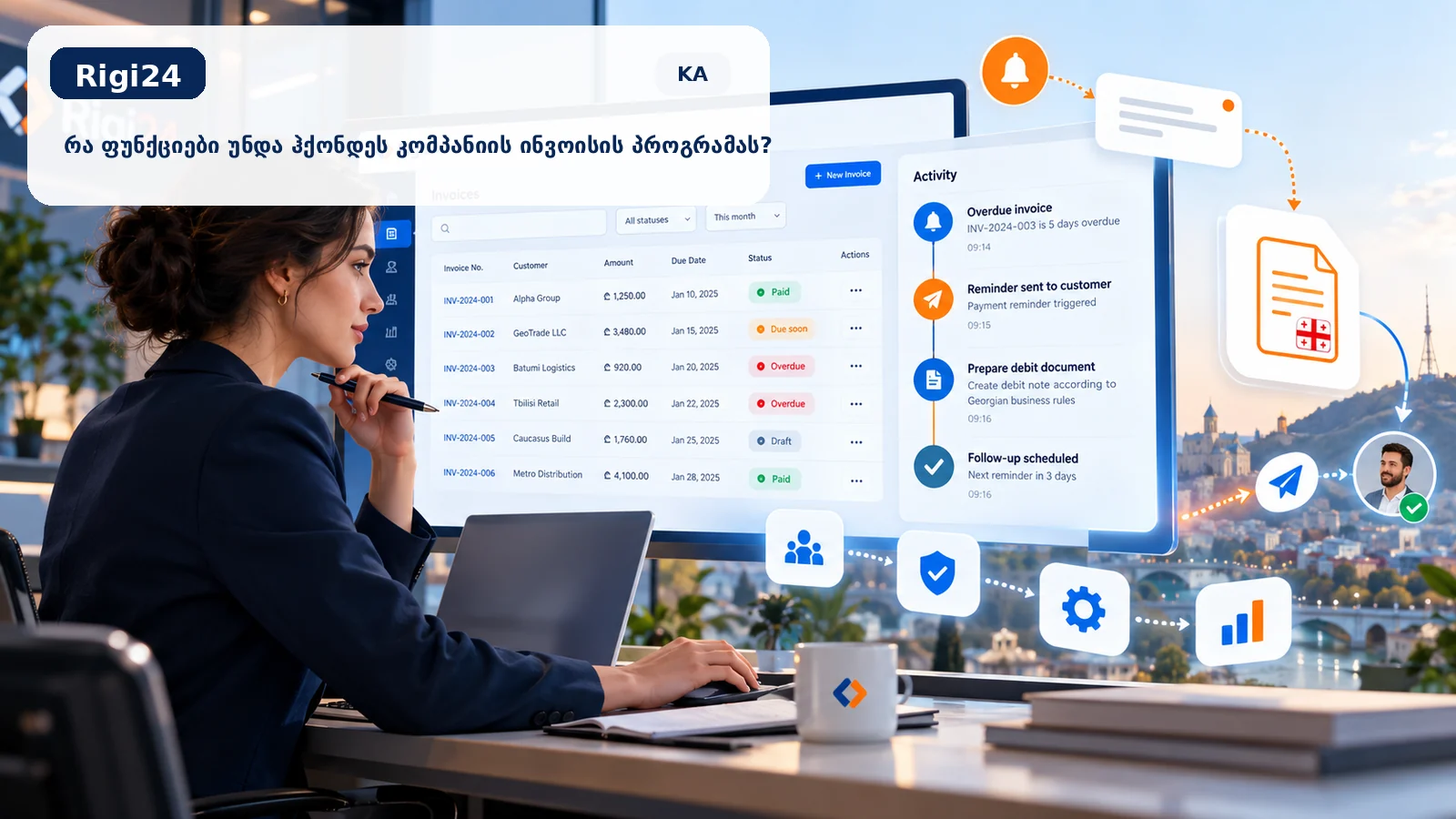 Rigi24 Academy · InvoicingComplete Guide to Rigi24 Invoicing — Invoices, Acceptance Acts, Payments and Accountant Workflow