Before you begin
This story-led series teaches practical concepts in attendance tracking, school management, and business software. Each chapter presents a relatable situation, followed by takeaways and links to explore the tools further.
Important note: Characters, dialogue, and the names of individuals or client businesses in these scenarios—apart from explicitly identified real brands—are fictional or dramatized for educational purposes. This is not a factual account of a real case or an allegation against any person or company. NetCity, Rigi24, Kadrebi and SkolaPlus are real brands and services; their features may evolve.
What will you learn?
- The coin box and RFID reader sit inside the elevator; the GSM intercom is a separate device at the entrance.
- Copied cards belonged to an old demonstration installation, not all access control products.
- Check technical compatibility, costs and safe migration before replacing a working device.
- CRM records and follow-up reminders protect the customer relationship from staff turnover.
The Device They Never Forgot
Wednesday, 9:48 AM - NetCity Office
This time, Nika arrived neither so early that anyone would be surprised to see him nor so late that he would need to explain himself. There were still twelve minutes until the workday began.
The office was dimly lit. A few empty chairs, monitors in sleep mode, and the soft sound of keys being pressed on keyboards.
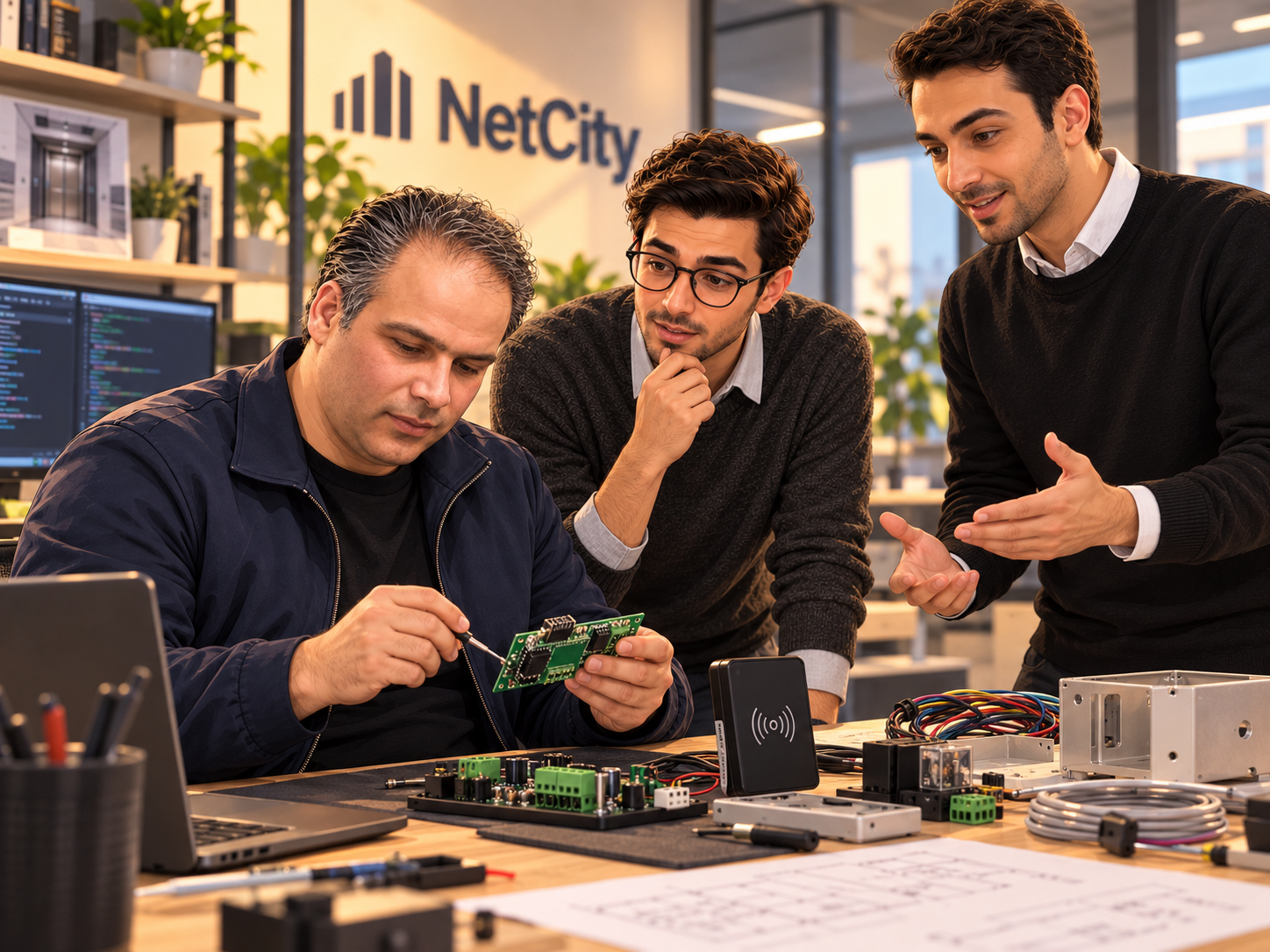
Morteza was sitting at the end desk. A small electronic board was next to his laptop, and he was shifting between a paper map and lines of code on the monitor.
Nika said, "Good morning! Do you really leave this place at night?"
Morteza looked up. "Good morning. Sometimes!"
"I think if I come tomorrow morning, I’ll see you took the chair home with you!"
Morteza smiled. "If I take the chair, I’ll have to return it earlier tomorrow."
Nika laughed and went to his desk. To him, Morteza was simply a longtime, quiet colleague who apparently knew how to handle the company’s technical work.
A few minutes later, Giorgi arrived. He placed his phone on the desk and said, "Nika, we're going out together today. We have a site visit."
"Who has disappeared this time?"
"No one. At least I hope so! It's about an old elevator."
Mari said from behind her monitor, "So please don't disappear in the elevator yourselves."
Everyone laughed, but Giorgi placed a paper on the desk and said, "By the way, this one has a strange story. The client has been looking for a company whose name almost no one here knows."
A name that was no longer on the board
Giorgi turned the phone towards Nika. The message read: "Ten years ago, you installed a card reader for our building. It works, but now we need to manage the card access properly. Can someone come?"
Under the message, a name appeared: Gela Machavariani.
Nika asked, "Why did he message us?"
Giorgi said, "This part is interesting. Mr. Gela first searched for the name 'Data Transfer.'"
"Data what?"
"Data Transfer. The old name of this collection. Work was done under this name back in the day. Since 2018, the name NetCity has been used."
Nika glanced at the board. "So that's why he couldn't find it."
"Part of the story has been this. The previous building manager has also changed, and proper documents from that time are missing."
"How did he finally find us?"
"From an old phone number. I found the number on one of the installation papers and it still answers."
Nika said in surprise: "The name has changed, but the number hasn't?"
Giorgi shrugged. "Sometimes a phone number lasts longer than the entire archive of a building."
Morteza, without stepping away from his work, said: "Before you leave, ask what result the building wants. Just looking at the device isn't enough."
Giorgi replied: "We'll go see the conditions, take photos, and bring back a precise request."
Nika thought to himself that there must be a simple solution for a ten-year-old device; either they would repair it or replace it. He still didn't know that the situation wasn't that simple.
Eleven oh five - a building in Old Tbilisi
The alley was narrow, with stone walls, old balconies, and windows that seemed to each tell a story from years gone by. Mr. Gela was standing in front of the entrance waiting.
"Welcome. I spoke with your colleague yesterday. Honestly, I didn't think I would finally find you."
Giorgi said: "We're here now. First, please tell us exactly what you need."
Gela shuffled the keys in his hand. "For now, the device is working. The problem is that we can no longer properly control people's cards. One tenant has left, and the card is still with him. We need to create another card for the new tenant."
At that moment, a young man arrived with two shopping bags and waited. Gela entered an apartment number on the intercom device next to the door. A moment later, a voice came from the speaker. Gela introduced himself, and the resident opened the door from behind his mobile phone.
Nika stared at the device. "Is this from those years too?"
Gela said: "Yes. This is a GSM intercom. We still use it. Back then, it was something new for the building."
Giorgi said: "So the call is made through the mobile phone network; this device is different from the elevator coin box."
Nika laughed: "I'm relieved; I thought we had to drop a coin to open the door too!"
Gela laughed and said, "Put the coin in for the elevator. It's still waiting for you there."
Two ways to move
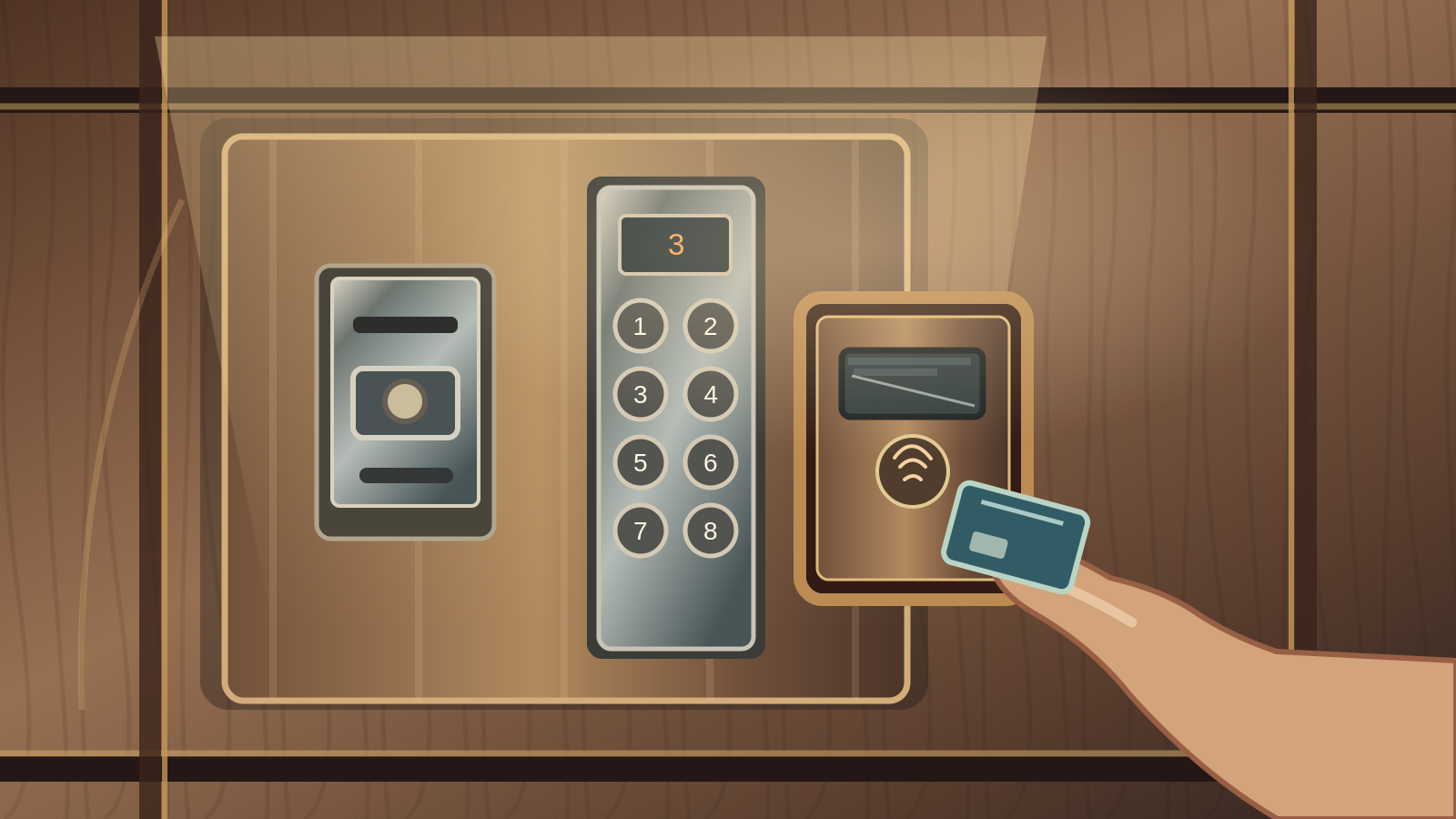
Inside the old cabin, there was a smell of aged wood and cleaned metal. Next to the floor button panel, there were two separate devices: a coin box and a small card reader with a frame resembling wood. The card reader blended so well with the cabin's decor that Nika initially thought it was part of the old elevator's decorations.
Gela pointed to the piggy bank. "We used to drop ten or twenty tetri to use the elevator. That method still works."
Then he took a card out of his pocket and held it close to the card reader. A short beep sounded. Gela pressed one of the floor buttons, and the elevator began to move slowly.
Nika said, "So both ways are still active?"
"Yes. Some people come with coins, most residents use cards."
The small display of the card reader did not light up. The edges of the frame were worn, but the card reading section worked without hesitation.
"When did it break down?"
Gela said: "It's been a while. Since it was reading cards, no one went to fix it. There was no number on the body to know who to contact."
Nika quietly asked: "Have you been using it every day since 2016?"
"Almost every day. That's why I say our problem isn't the elevator's movement itself."
Giorgi took a photo from inside the cabin of the model number on a visible board; without touching the wiring or settings.
Nika turned to Gela and said: "So the problem isn't the device that has stopped moving. The problem is the people who have cards, and you no longer know whose card is whose."
Gela nodded. "Now you said it right."
One card for all.
In the small management office of the building, Gela took out a metal box from the drawer. Inside were several cards and a yellowed folder.
"Whenever a new resident came, we would make a copy of this card as a sample."
Giorgi picked up the card, looked at it, and immediately handed it back. "You copied directly from this card?"
"Yes. It was simple."
Giorgi said, "As far as I know, in a complete management system, card access is defined and controlled separately. This copying method is very similar to how trial versions work. Are you sure you received the device in a demonstration mode?"
Gela thought for a moment, then excitedly said, "Oh! Now I remember. Yes, they installed it for free. They said it was to familiarize people with the card method. They also gave a master card."
Nika asked, "Free? The device and its installation?"
"Yes. At that time, the discussion was that if the building agreed, we would later transition to the full version and software management."
"So why didn't you?"
Gela laughed. "Have you had a building meeting yet?"
Nika said: "No."
"Then you still have hope for life!"
They all laughed. Gela continued: "One person said to keep the piggy bank, another said a monthly charge is better. One also said if the device works for free, why should we incur new costs? Then the manager changed, the documents got lost, and the decision was postponed."
Giorgi asked: "Has this device been connected to the internet or central software over the years?"
"No. It has been working independently right here. Just like the pilot model."
Giorgi said: "Then it's clear why the card information for this building hasn't been updated in the online system. The management version hasn't even been activated."
Nika placed two images side by side in his mind: a device that has lasted ten years, and a file that has been stuck there for ten years.
The real problem behind a simple request
The door opened and Ms. Natela, one of the long-time residents, poked her head in.
"Mr. Gela, excuse me; my new tenant says he needs the elevator card."
Gela said, "We'll fix it."
The woman paused. "It's just that the previous tenant hasn't returned his card yet. We don't want that card to remain active like this."
Giorgi asked, "Do you know which version of the card he has?"
Natela looked at him. "Isn't it the same as the others?"
Gela sighed. "That's it. We were making copies from a sample card."
Nika just realized what the issue was. When several copied cards share a common identifier, it’s impossible to tell which version belongs to whom just by looking at their appearance; deciding on replacing or managing the cards requires examining the model and alternative solutions.
Gela said: "We want to be able to cut off access for a resident who has left, define a card for the new resident, and manage the charging account more transparently in the future. We just don’t want to throw away all the devices for no reason."
Giorgi closed the notebook. "So your request has three parts: independent access control, examining system upgrades, and the cost that residents can handle. The repair of the display will be examined separately."
Natela, who was still standing by the door, said: "And the fourth: someone finally explain to us what we are paying for!"
Giorgi said: "Actually, we should start with that."
Gela smiled. For the first time since the beginning of the meeting, her worry lessened a bit.
The proposal is on the table.
On Gela's desk was a document from another company: a proposal for replacing the controller, new cards, and building management software.
Nika quickly said, "So the competitors have come for an upgrade too?"
Gela replied, "Yes. Their proposal isn't bad. But before making a decision, we wanted to talk to the previous company as well."
Giorgi flipped through the document. "Some features on this list are also anticipated in NetCity's management products. But I don't want to promise compatibility with a ten-year-old device. We need to check the board model, connections, and current conditions."
Gela asked, "Can you provide a completely new device?"
"We can look into the possibility. Maybe replacing the controller is necessary and the casing will also be new; perhaps repairing part of the equipment will be sufficient. The outcome will be clear after the technical review," he said.
Gela looked at the competitor's document. "Honestly, if that company's proposal is better for us, would you still be upset?"
Giorgi smiled. "We need to help you make an informed choice. We're not here just to sell; we won't force you to replace something that still works."
Nika didn't say anything else. In his mind, selling meant convincing the customer. Now he saw that sometimes the first task of a salesperson is to dissuade themselves from speaking too soon.
They noted down the manager's contact number, building specifications, authorized photos of the equipment, and the residents' requests. Giorgi didn't promise that "everything will be installed tomorrow"; he promised to check and return with a clear written proposal.
Gela said during the farewell: "So this time we won't leave the decision in the desk drawer."
1:20 PM - Report of a short trip
When Nika and Giorgi returned, Mari was busy answering a support call. Nika waited for the call to finish and then said: "I saw something strange today. An experimental device that has been working almost every day for ten years!"
Mari asked: "Really?"
Giorgi opened the photo of the cabin on the monitor. "What's even more interesting is that the name of the company we installed it for was on the old papers: 'Data Transfer'. They were looking for us under this name."
Mari said: "Ah, that's why it took so long to find NetCity."
Nika said, "In the end, they found an old number. The number was still answering!"
Giorgi brought the device's photo next to Morteza's desk. "Do you recognize this model?"
Morteza looked at the image for a moment. "Yes. It's from the early series. They had a wooden frame. Some samples worked independently for familiarizing buildings."
Nika asked, "Why could they copy its cards?"
Morteza said, "Because it was a demo version and, like a complete system, separate and managed cards were not defined. We shouldn't generalize that feature to all models."
"Was the complete software available back then too?"
"Yes. The original idea at that time was not just a card reader; managing cards, accounts, reports, and building tasks was also important. But this building did not activate the original version."
Giorgi asked, "So what suggestion should we give now?"
Morteza said, "First, make sure what device is exactly there. Then write down the options for repair, upgrade, or replacement separately. Also, have a plan for converting the cards; we can't leave the residents without access in the middle of the change."

Nika mischievously said, "I thought we would just go with a screwdriver and be back in half an hour!"
Morteza smiled. "Sometimes the screwdriver is the easiest part of the job."
Why don't we install it like before?
Giorgi said, "If a few more buildings have such requests, wouldn't it be better to focus again on new installations?"
Morteza looked at the photo on the screen. "The company's current policy is not to focus primarily on new elevator and intercom installations. There are good companies active in this market, and customers have built relationships and trust with them. We are working on projects in several other areas, especially software."
Nika asked, "So what happens to the old customers?"
"Their requests will be reviewed. If they want repairs or renovations and it's technically feasible, we will provide a solution. Just because the product is old doesn't mean the customer will be forgotten."
Giorgi said, "And the elevator companies that want to sell these services themselves?"
"They can call for a joint solution. There's no need for each company to build its own management software, financial section, or controller from scratch. Some collaborations can be done under the name and brand of that same company."
Nika looked at the device on the screen. "So maybe one day these same features will be seen in another building under the name of another company."
"Depending on the agreement, it might be."
Nika left the room. He was still thinking that Morteza was an old technical collaborator who recognized each device from a photo. He wanted to ask him how long he had been working here several times, but he saved the question for a time when he was less busy.
A customer who shouldn't get lost again
Giorgi sat down at the computer and opened the CRM section of Rigi24.
Nika said, "Why are you still writing the report? Isn't the visit over yet?"
"The visit is over; the follow-up has just begun."
Giorgi recorded Mr. Gela's name, the building, contact method, card reader, GSM intercom, the status of the trial version, and the upgrade request. He placed the relevant equipment photos in the file and explained that the current competitor's proposal should also be reviewed without judgment and with the customer's permission.
A follow-up reminder was created for next week; not to pressure the customer, but to deliver the results of the technical review by the promised deadline.
Nika asked, "What if Giorgi isn't here next year, then what?"
Giorgi laughed and said, "Thanks for your lovely wishes!"
Mari said from behind the desk, "Let his second day finish first, then he can decide about others leaving!"
Nika laughed. "What I mean is that information shouldn't stay on one person's phone."
Giorgi nodded. "Exactly. And that's one of the reasons for recording the customer history."
Nika said after a moment of silence, "It's strange. The building has had a device for ten years. We could have had its number and address too. But the connection was cut off."
Giorgi replied, "The device can work without daily contact; the relationship with the customer cannot. The relationship needs to be maintained."
Nika looked at the report. It was no longer about an old wooden box; it was about how to make something that has technically endured also endure in terms of human connection.
A proposal, not an immediate sale
At five ten in the afternoon, Giorgi called Gela.
"The initial assessment has been done. We have three possible paths: if the suitable part is available and repairable, we can address the display or the casing; if you want new management capabilities, we will check compatibility for the controller and software communication; and if you prefer to completely upgrade the system, we will prepare a separate proposal."
Gela asked, "So we don't have to change everything right now?"
"No. But before the final decision, the technical condition of the device needs to be confirmed in person and accurately. Especially the status of the copied cards and the method of transferring residents to separate accesses."
Gela quietly said, "This time I will bring up the issue in the building meeting. After all, I want to know what card and what access each person has."
Giorgi said, "The written proposal and cost estimate will be prepared after the technical review. You can make your decision with enough time."
The man laughed. "Just one request: if the building meeting takes ten years again, remind us!"
Giorgi replied, "For that part, the reminder is noted!"
When the call ended, Nika said, "So we still haven't sold anything."
Giorgi said, "In exchange, we know what issue needs to be solved. That's enough for today."
The end of one day, the beginning of another question
At six in the evening, the employees gathered their belongings. Nika stood by the window for a moment. This was the second day he had expected to only learn 'software work' and instead had entered the lives of people, each with a completely different issue.
From the elevator that required coins to the student who hadn't gone to school for several days, one thing seemed similar: people manage with old methods for a long time; until the day they realize something isn't working anymore.
Nika said to Mari: "Today I realized that some things work for ten years and people don't even remember the name of their maker."
Mari said: "Some things work for ten days and people remember their names. What's important is what benefit they have for the customer."
Morteza was still busy at the end of the office. As Nika was leaving, he said: "Thanks for your hard work!"
"You too take care, Nika. See you tomorrow."
Nika closed the door and left.
Shortly after, Mari's phone rang while she was packing her things. Davit Metreveli, the manager of the restaurant from the first season, was on the line.
"Mari, first I wanted to say that the issue with Sandro has been resolved. We talked to him."
"I'm glad."
"But we have a new issue. A lady came to the restaurant today for the fourth time. Each time she says we promised her something last time. No one remembers what promise was made."
Mari asked: "About what?"
Davit sighed. "Loyalty points for old customers. We neither know how many times they've come, nor what points they've earned. We just have a few cardboard cards that we stamp."
Mari smiled and said: "So tomorrow we'll talk about the customers."
When the call ended, the office was quiet. On Giorgi's monitor, the new file for Gela's building was open; and on Mari's phone, the number of a restaurant that now had another issue.
This time, no one was supposed to look for a forgotten device. They were supposed to figure out why some customers return and others do not.
End of Chapter Three.
What we learned in this chapter
• The 2016 pilot sample under the name 'Data Transfer' was launched for free in several buildings; in this building, the controller operated locally and without an internet connection to the central system. This situation is different from the complete and managed product.
• The coin box and RFID reader were two separate devices inside the cabin next to the button panel. The GSM intercom was at the entrance of the building and allowed opening the door via a phone call; it was independent of the elevator's coin system.
• Copying the sample card was a feature of that pilot implementation. Regarding the security capabilities of other models, the actual specifications of each model must be examined.
• A device that is still operational may no longer meet the management needs of the building; before proposing a replacement, the needs, costs, safety, and user transfer path must be assessed.
• Since 2018, the company's name has changed to NetCity; the age of the installation does not mean that software development has stopped.
• Case management, recording visit history, and follow-up in customer relationship management help ensure that the experience and organizational connection are not lost with a change of manager or employee.
Additional information:
Introduction to the NetCity Building and Elevator Management System: https://netcity.ge/services-building
Familiarization with the GSM Intercom: https://netcity.ge/domophone
Familiarization with the CRM Logic in Rigi24: https://www.rigi24.ge/articles/crm-small-business-georgia?lang=en
Tools and further reading
Explore the real services and related guidance behind this chapter:
Learning note: examples are illustrative, not a substitute for reviewing real records.